
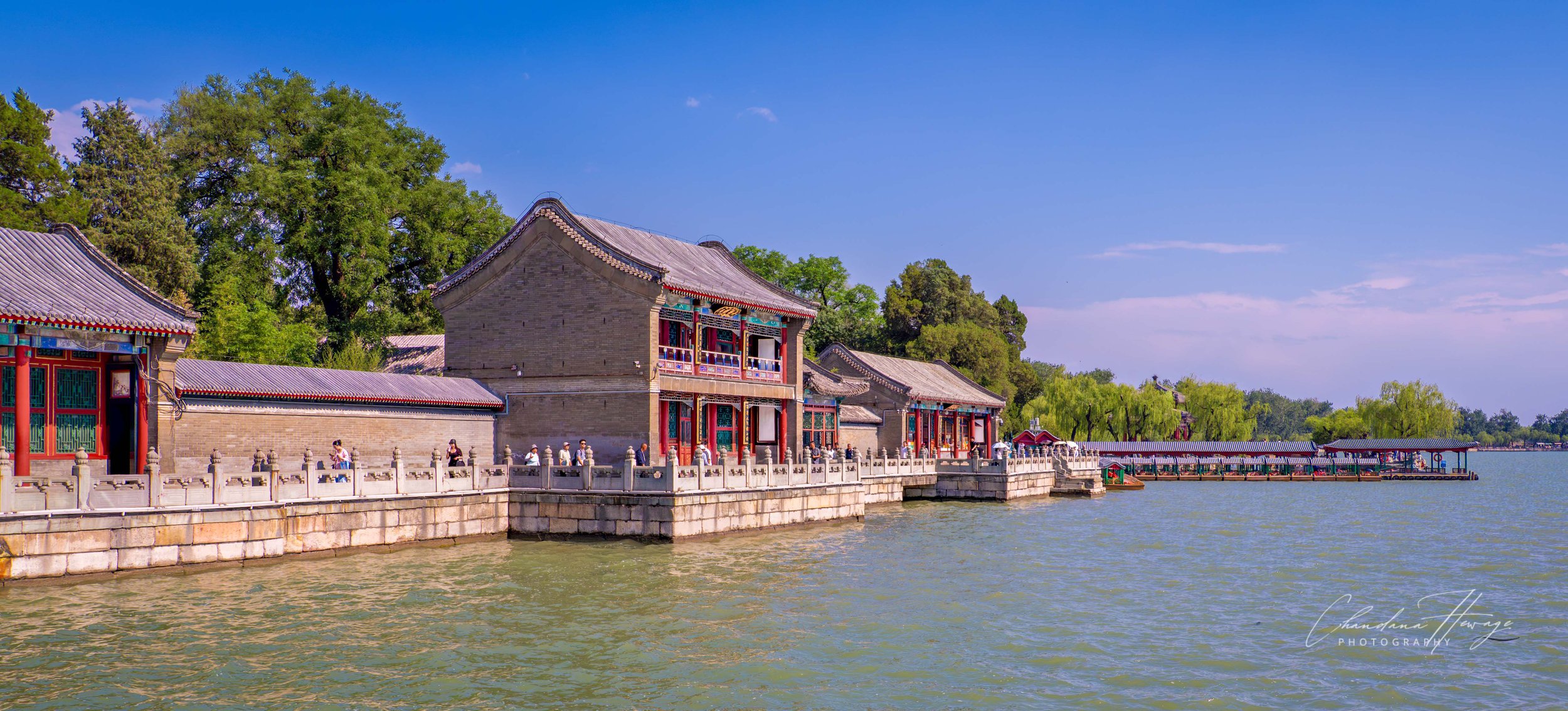
The Summer Palace
颐和园
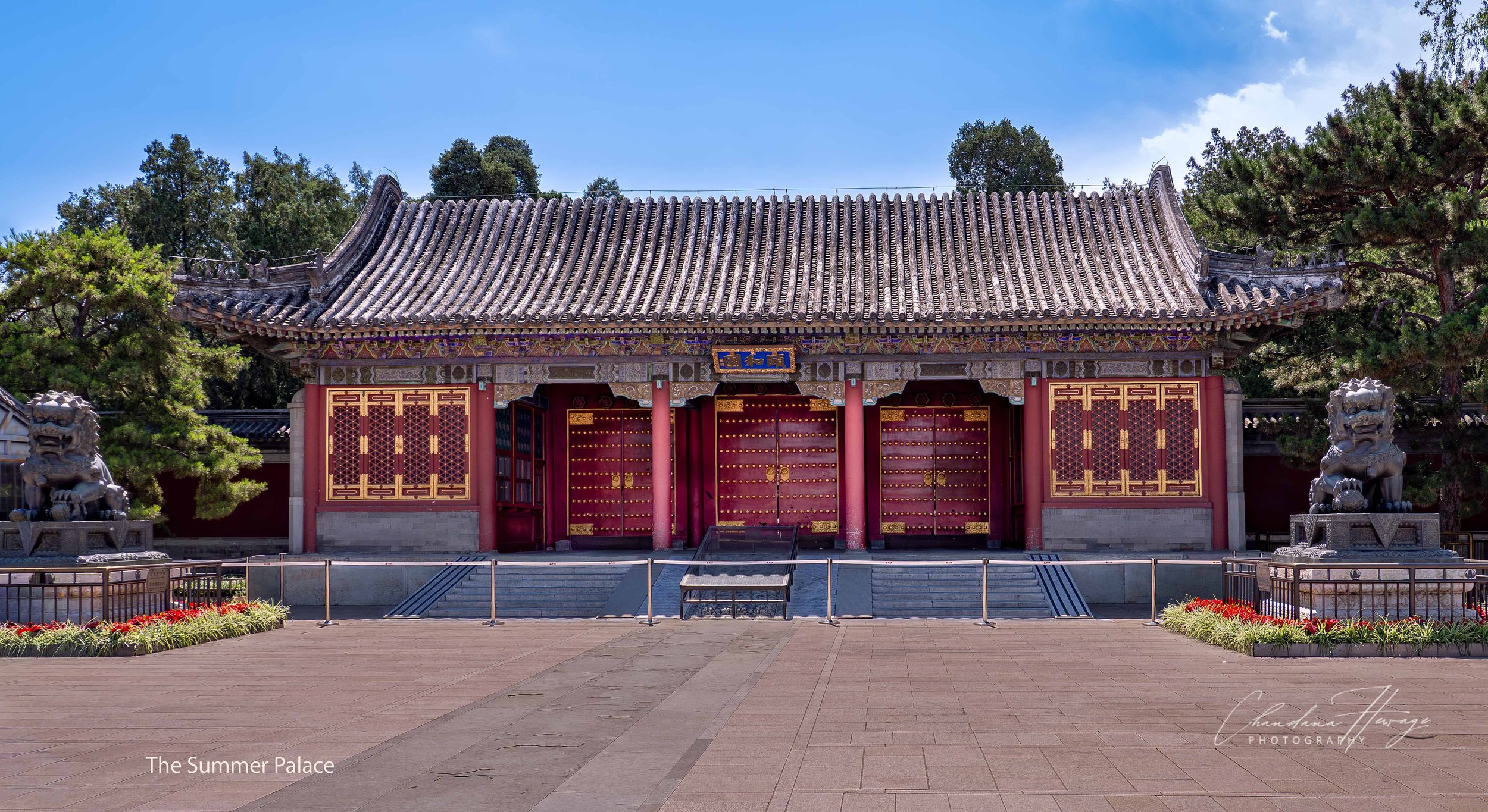
The East Palace Gate(Donggongmen) - The grand main entrance to the Summer Palace. First built in 1750 during the reign of the Qianlong Emperor and was later rebuilt in the 19th century. The gold-lettered signboard reads "Summer Palace" (颐和园). The calligraphy was written by the Guangxu Emperor. These doors open up to the courtyard of the "Hall of Benevolence and Longevity".
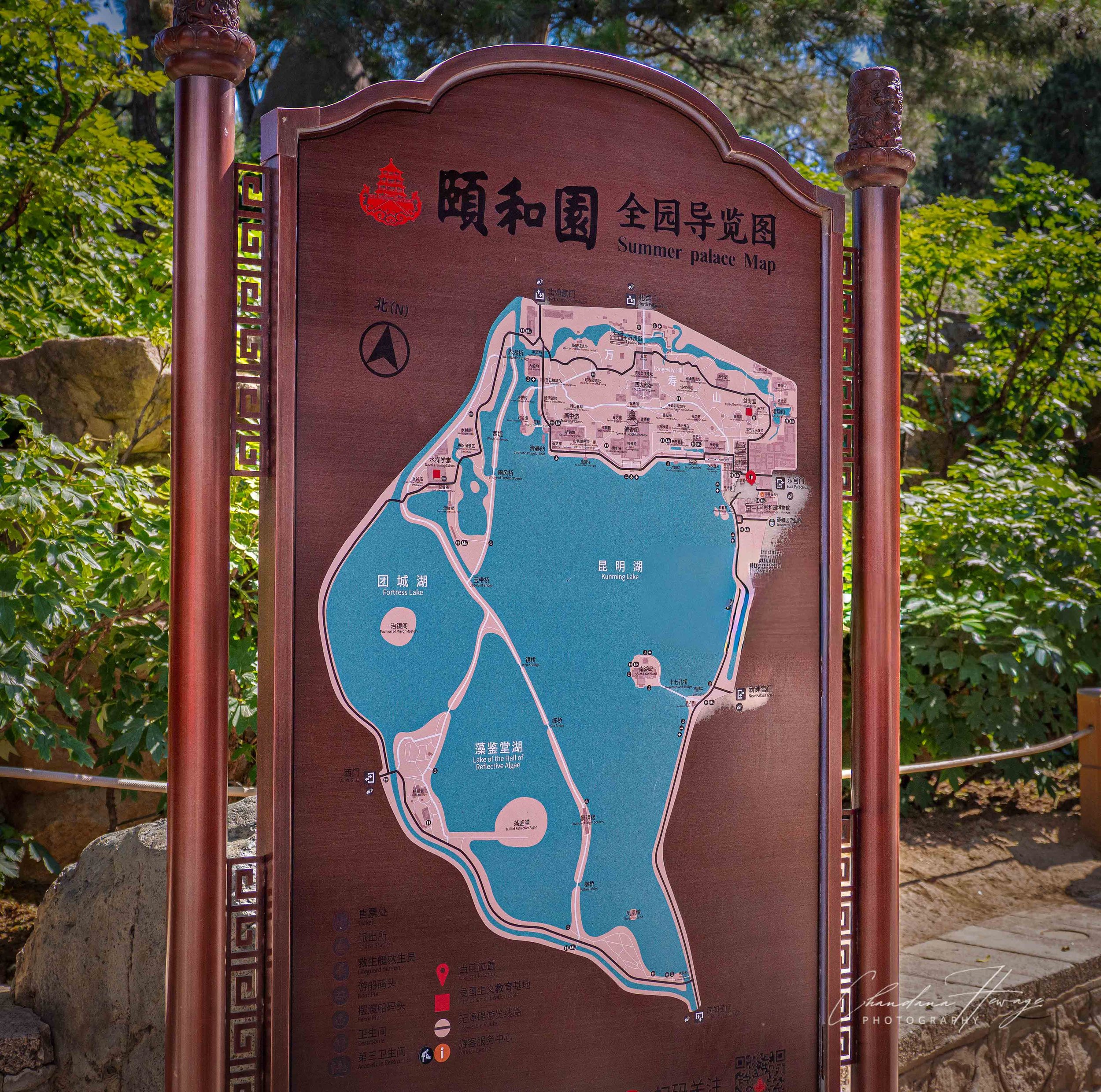
The Summer Palace, or Yiheuan (Garden of Preserving Harmony), is a UNESCO World Heritage Site and China's largest well-preserved imperial garden. It is located in Beijing's northwestern Haidian District and enclosed within a 2.9-square-km estate of artificial pavilions, halls, temples, and lakes. Originally constructed in 1750 by the Qianlong Emperor. The palace was destroyed in1860 during the Second Opium War and rebuilt in 1888 by Empress Dowager Cixi using diverted naval funds, only to be looted again in 1900 by the Eight-Nation Alliance.
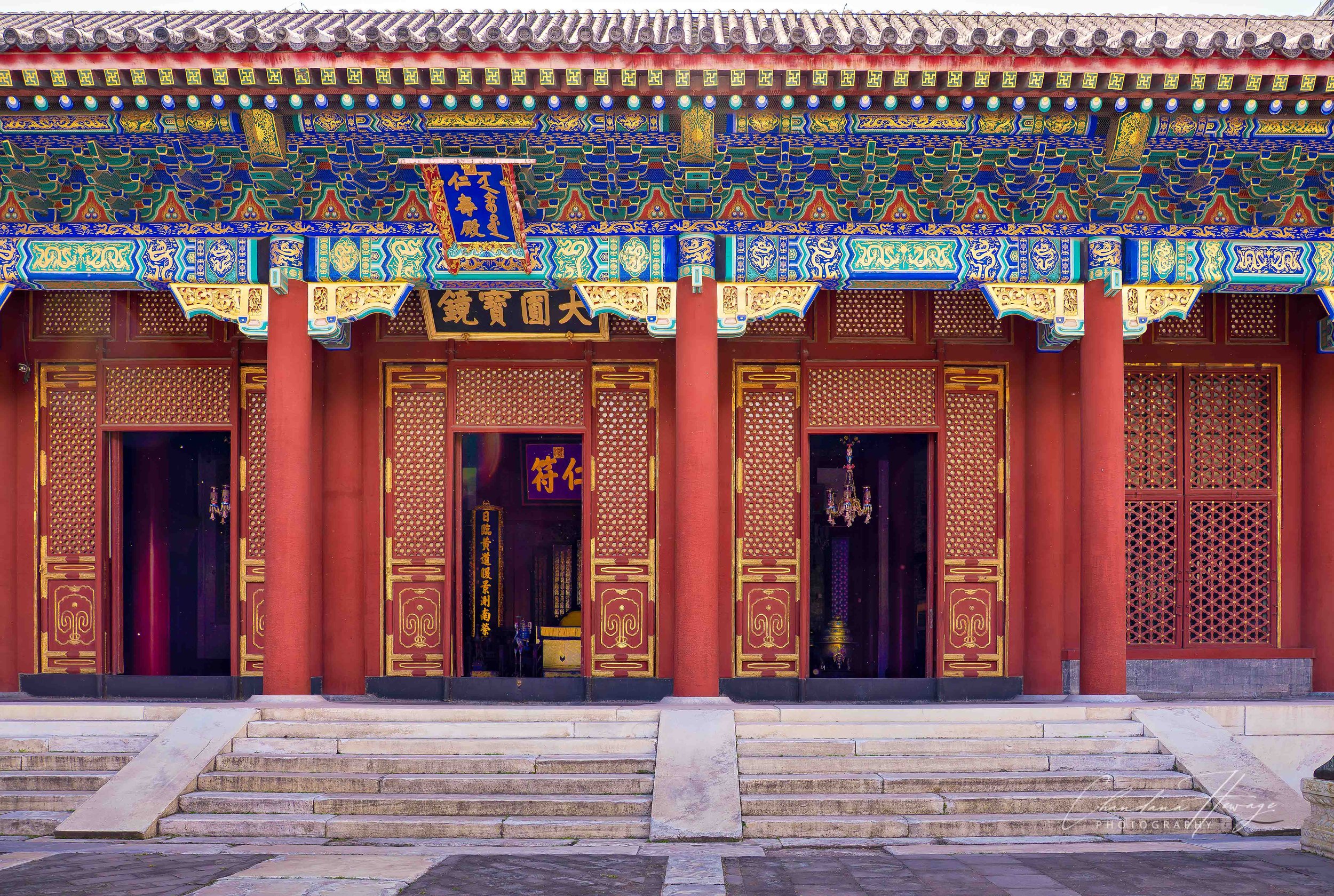
The facade of the "Hall of Benevolence and Longevity" (Renshoudian). Originally built in 1750. The gold placard reads, "A Great, Round, Precious Mirror" (大元宝晶), which means that governance should be as perfectly clear, unbiased, and all-reflecting as a mirror.
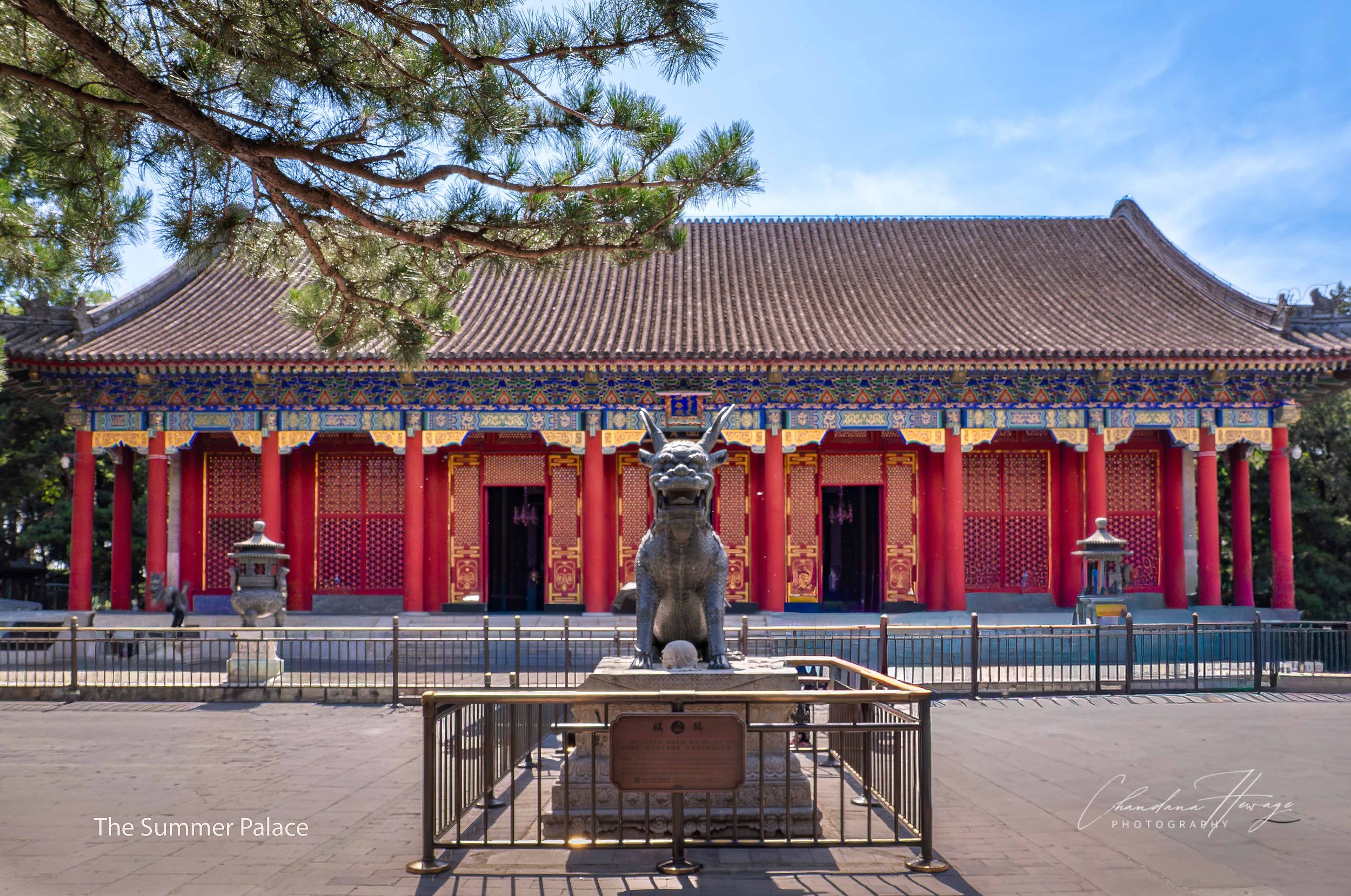
The magnificent bronze Qilin in front of the Hall of Benevolence and Longevity. The Qilin is a mythical, benevolent beast from Chinese folklore. This specific statue is a masterpiece of Qing dynasty bronze casting.
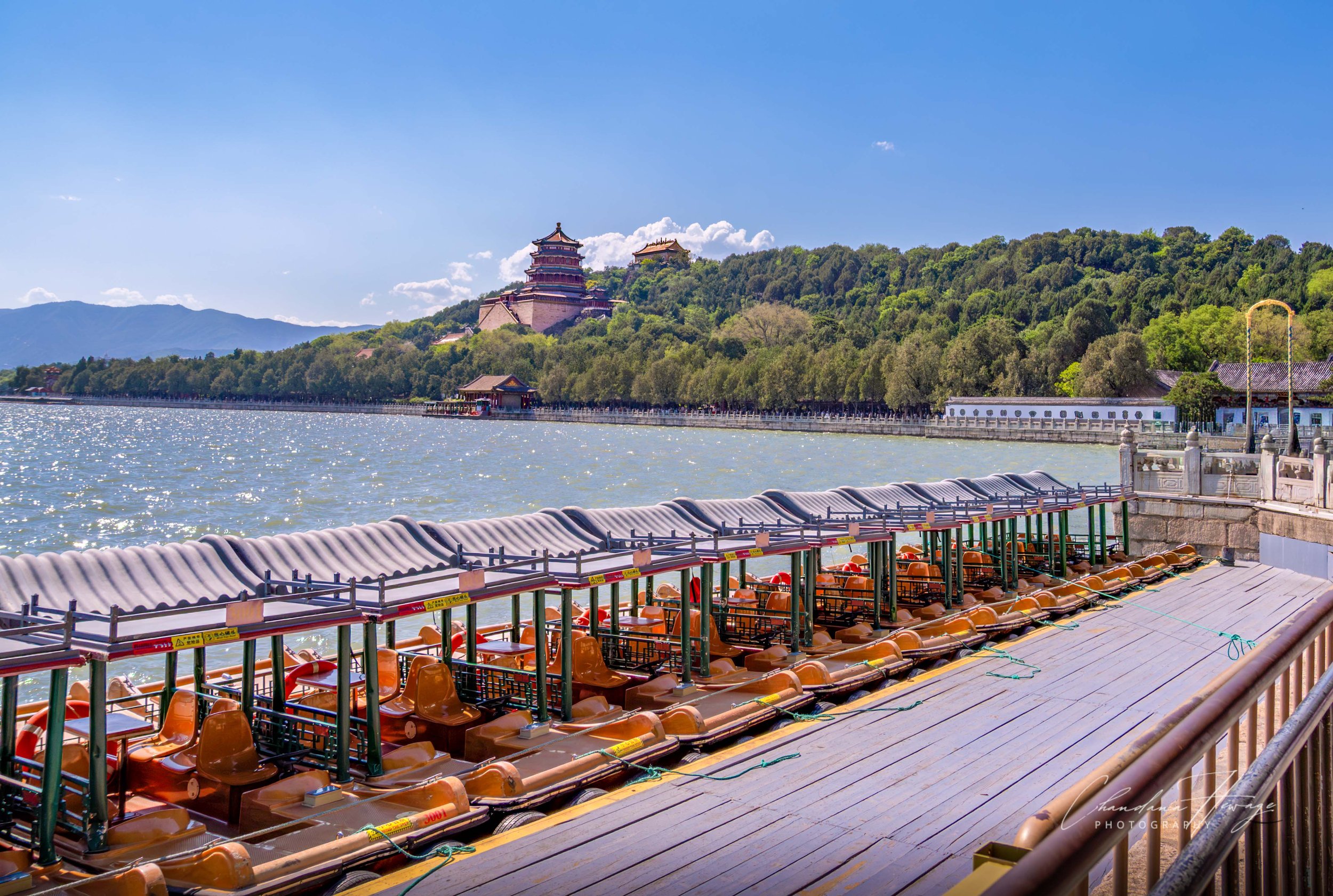
Kunming Lake and the Longevity Hill in the background. Kunming Lake covers 75% of the estate and is entirely man-made: hundreds of thousands of laborers manually excavated and widened an existing marshy pond during the Qianlong Emperor's reign. The earth dug was then piled up right next to it to build the Longevity Hill.
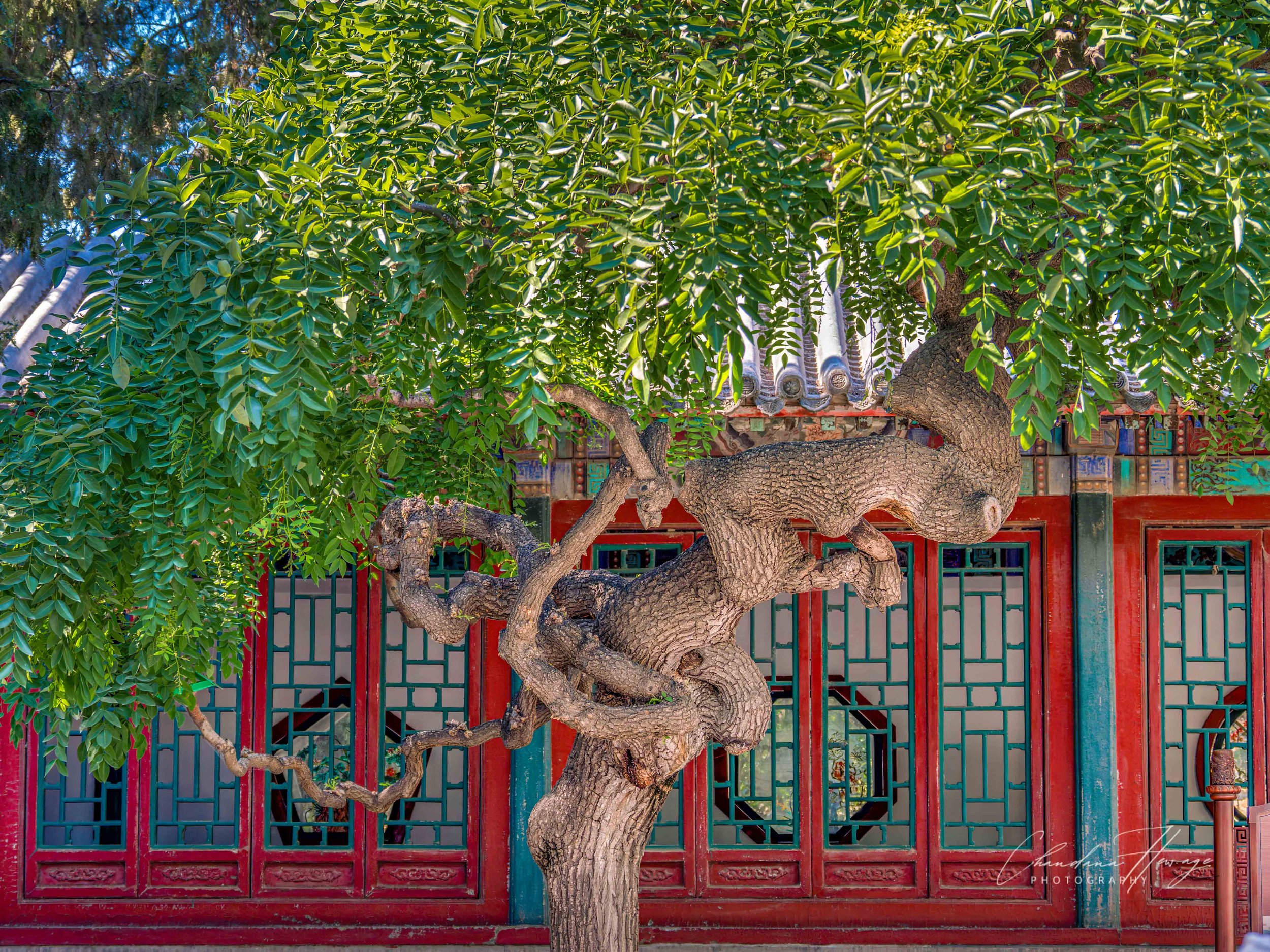
Ancient Chinese Scholar tree, standing in front of a traditional palace hall.
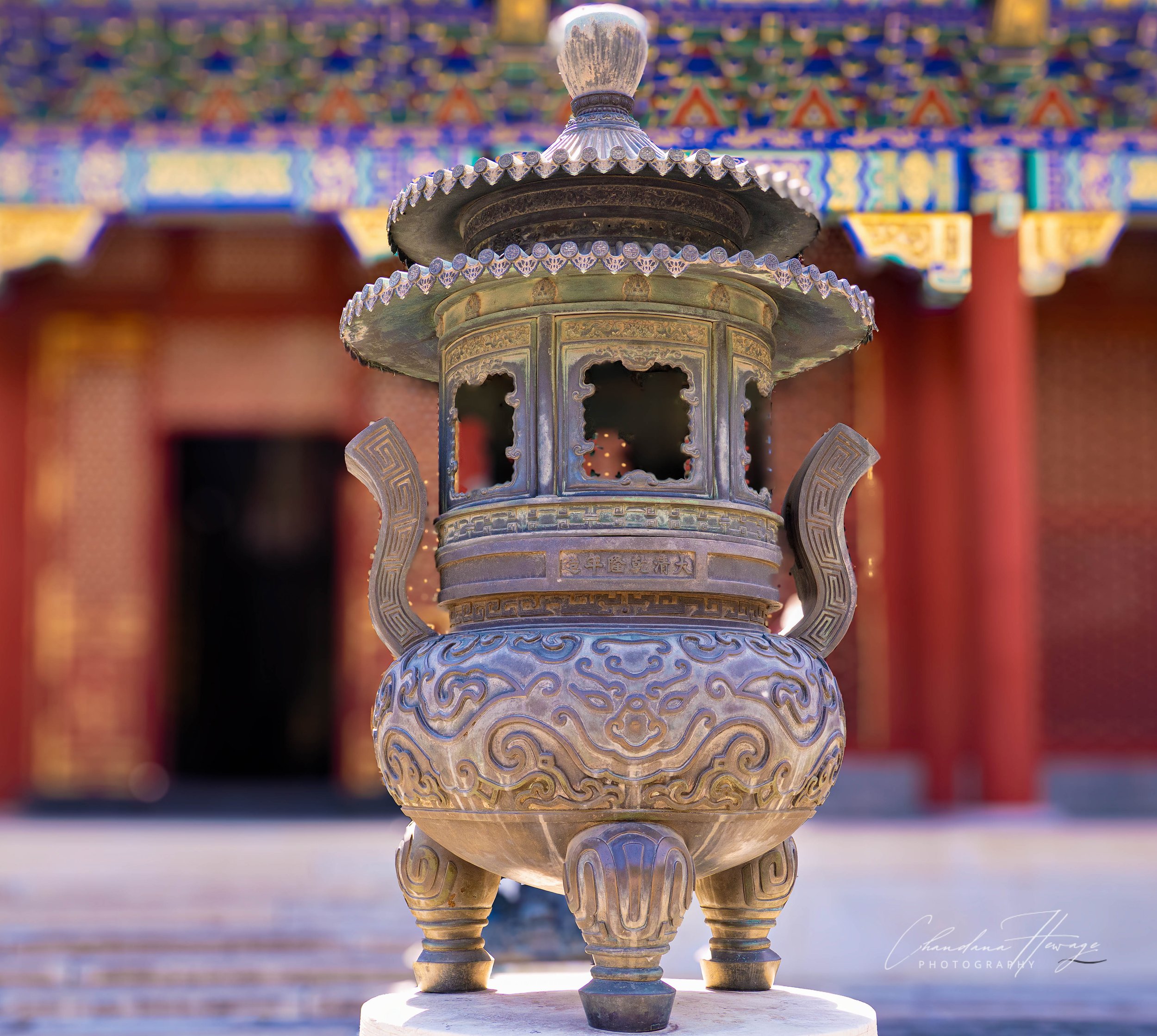
Imperial Bronze Incense Burner (Xianglu)
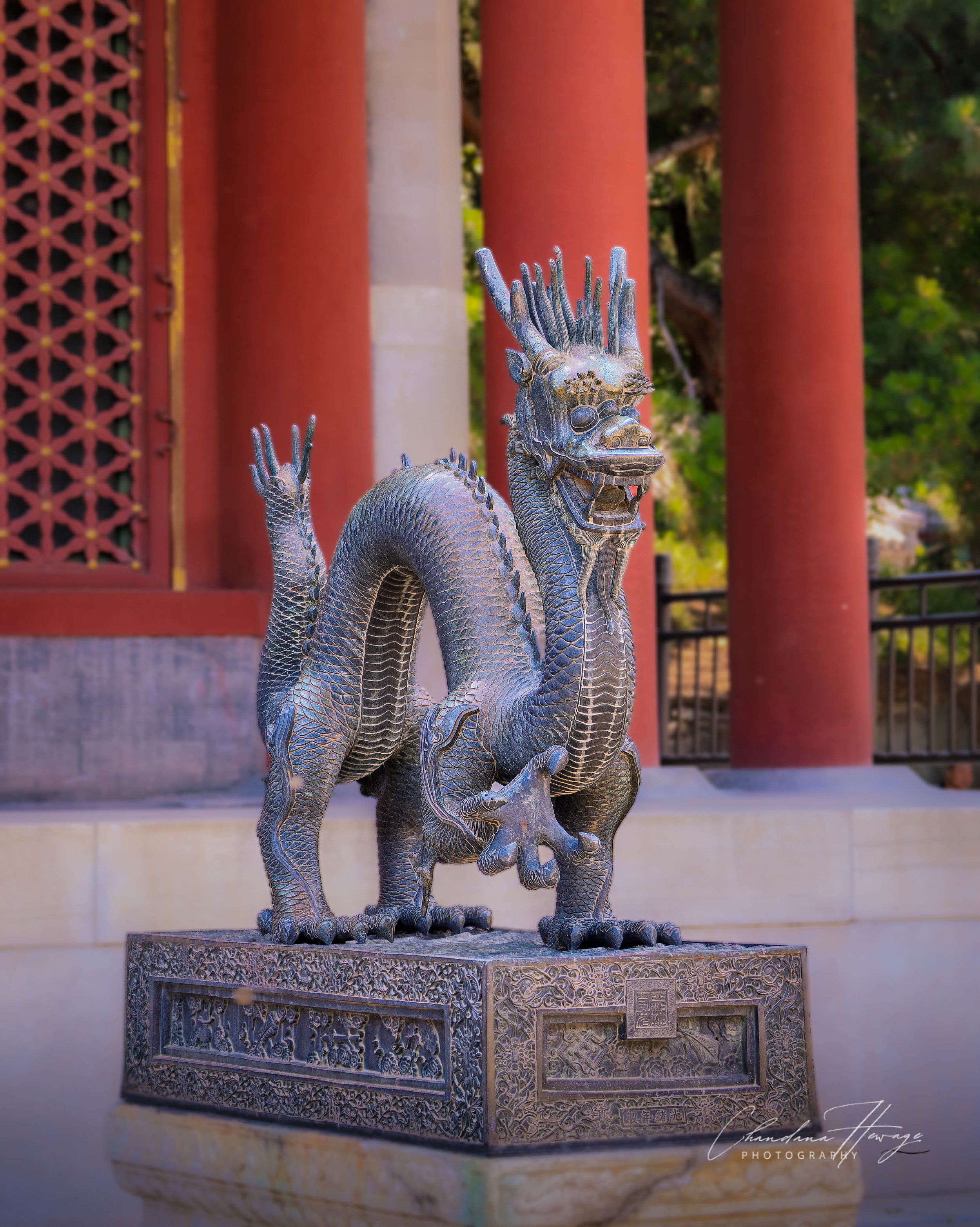
In traditional Chinese culture, the long dragon is the supreme symbol of imperial power, majesty, and the Emperor himself. This particular dragon was depicted with high energy and dynamism.
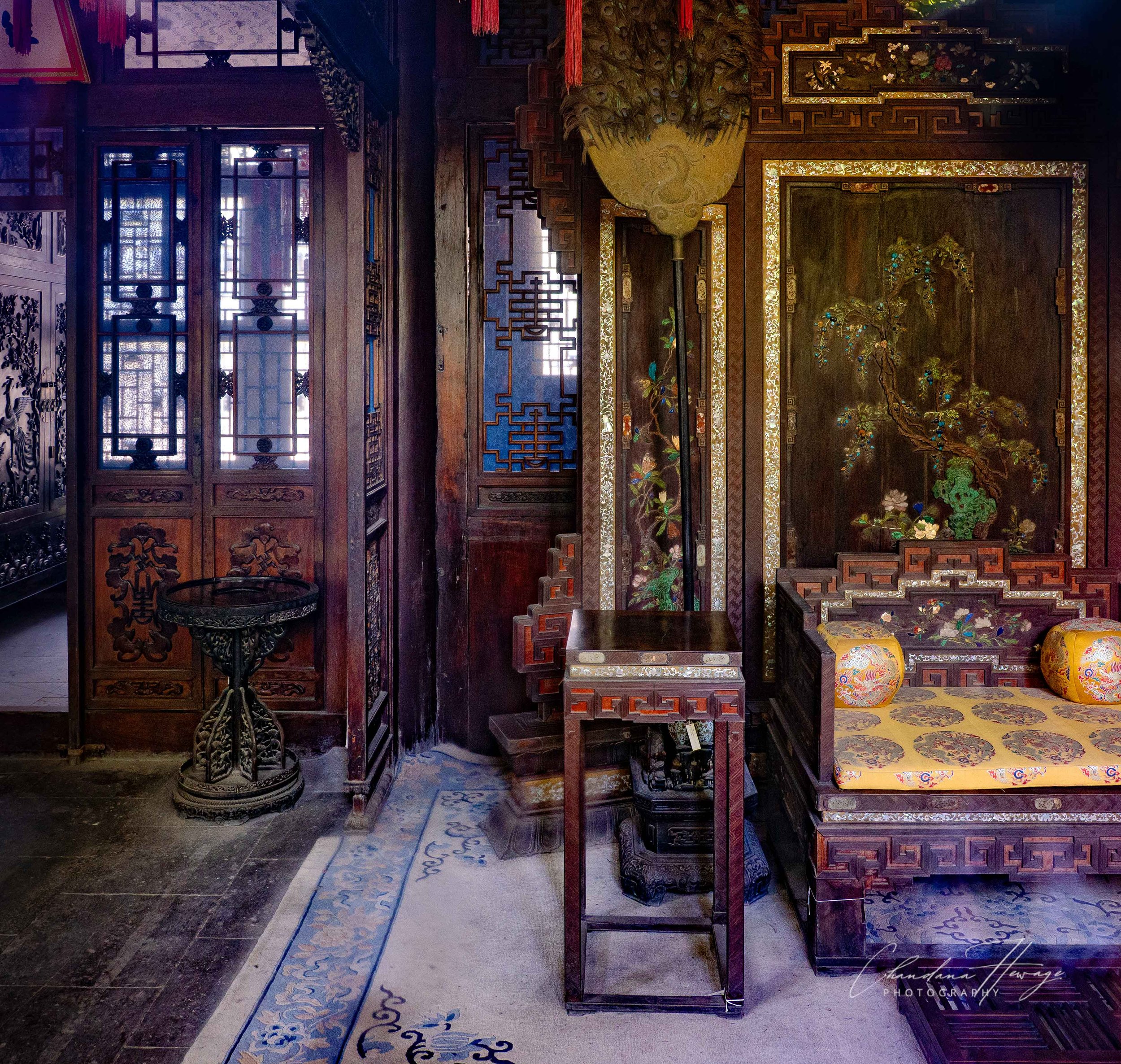
A part of the Throne Room inside the Hall of Benevolence and Longevity. (I shot this through dirty glass enclosing the interior. Visitors were not allowed inside.) The interior is a showcase of late Qing Dynasty court art.
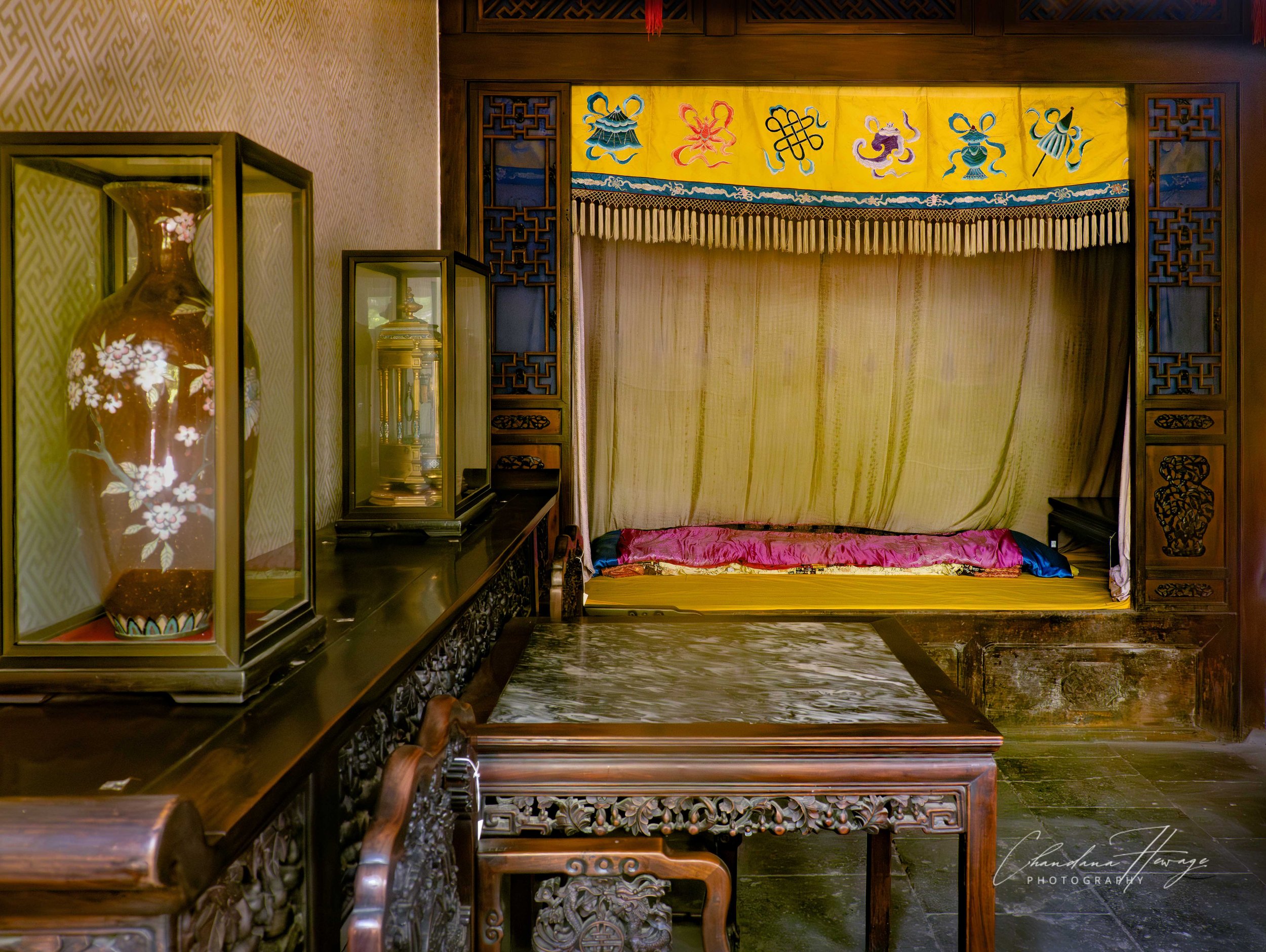
The intimate Imperial Bedroom, used by Empress Dowager Cixi (The Dragon Lady). This is located in the private residential quarters of the Summer Palace: The Hall of Happiness and Longevity.
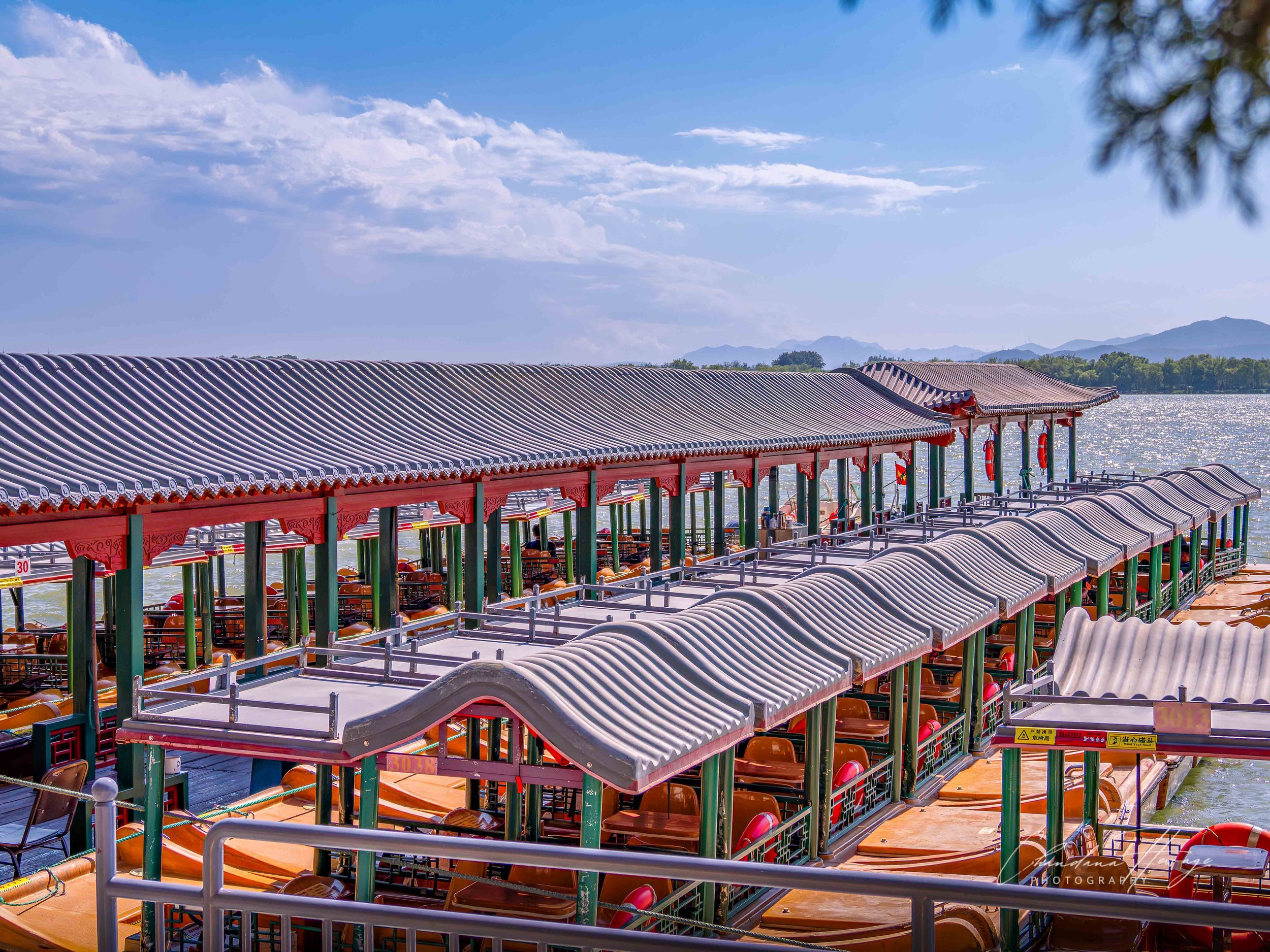
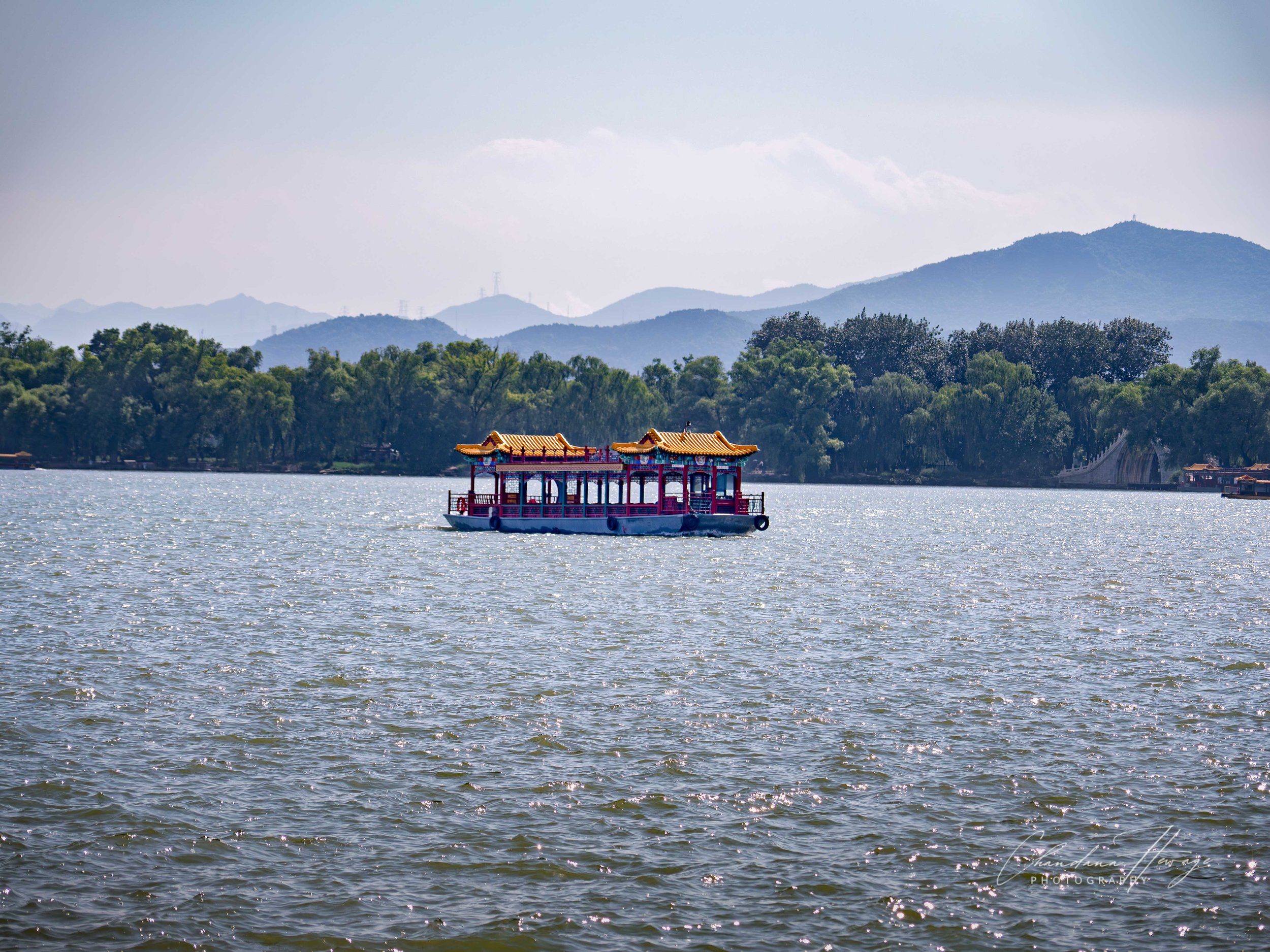
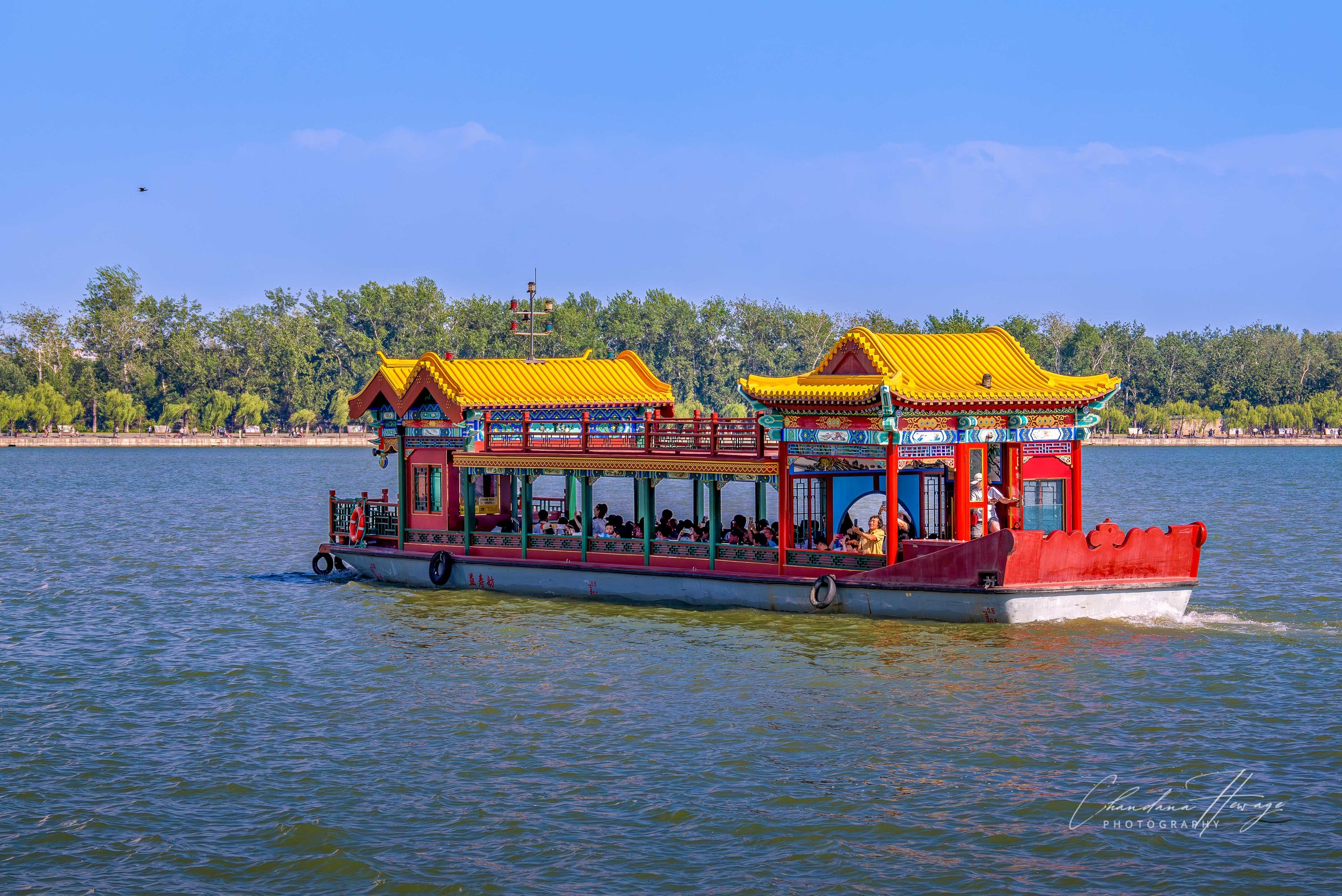
Central ferry and pleasure boat docks on the shores of Kunming Lake.
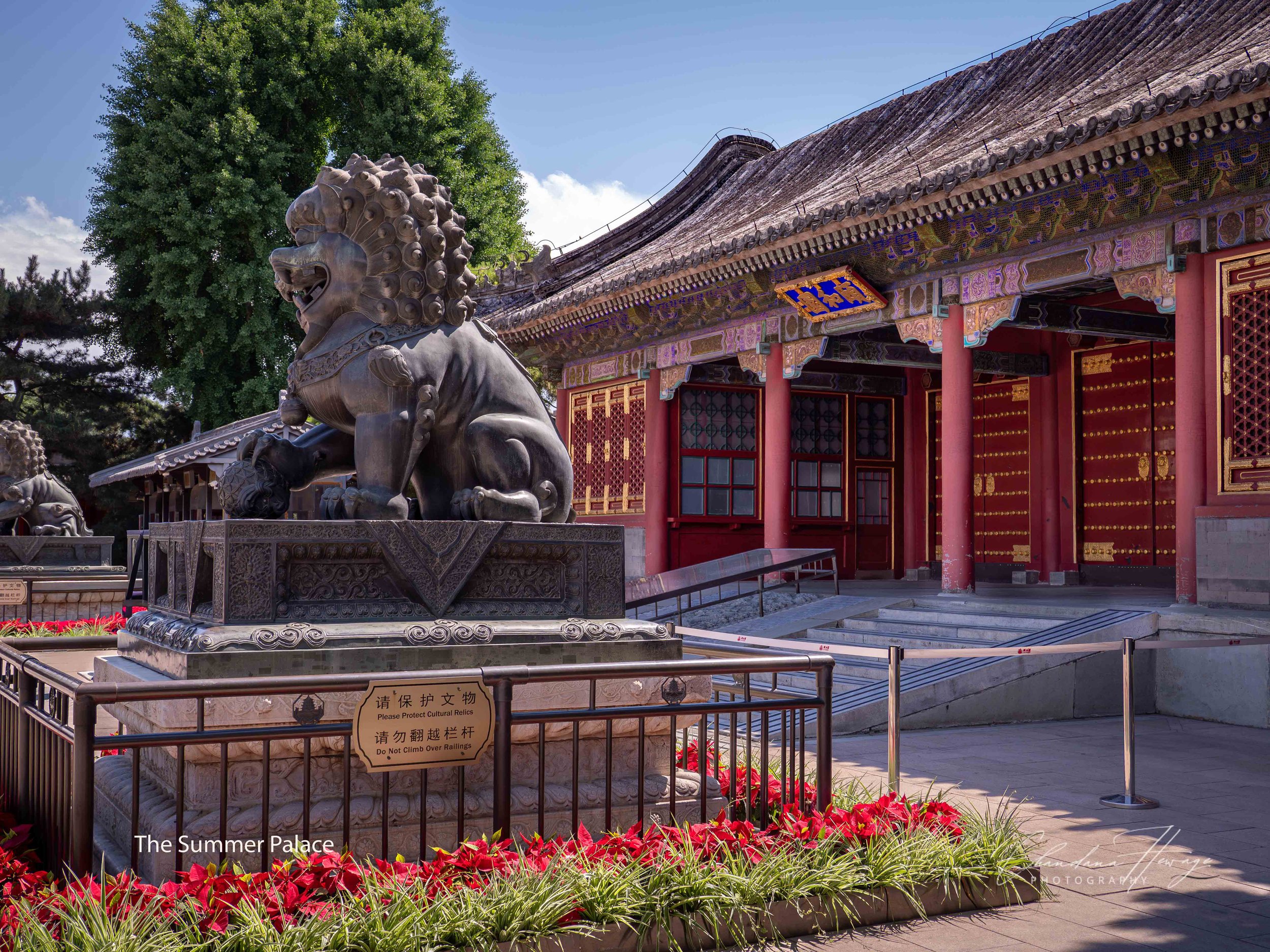
A majestic bronze Imperial Lion (Shi) guarding the entrance to the residential quarters of the complex just outside the grand Gate of Happiness and Longevity.
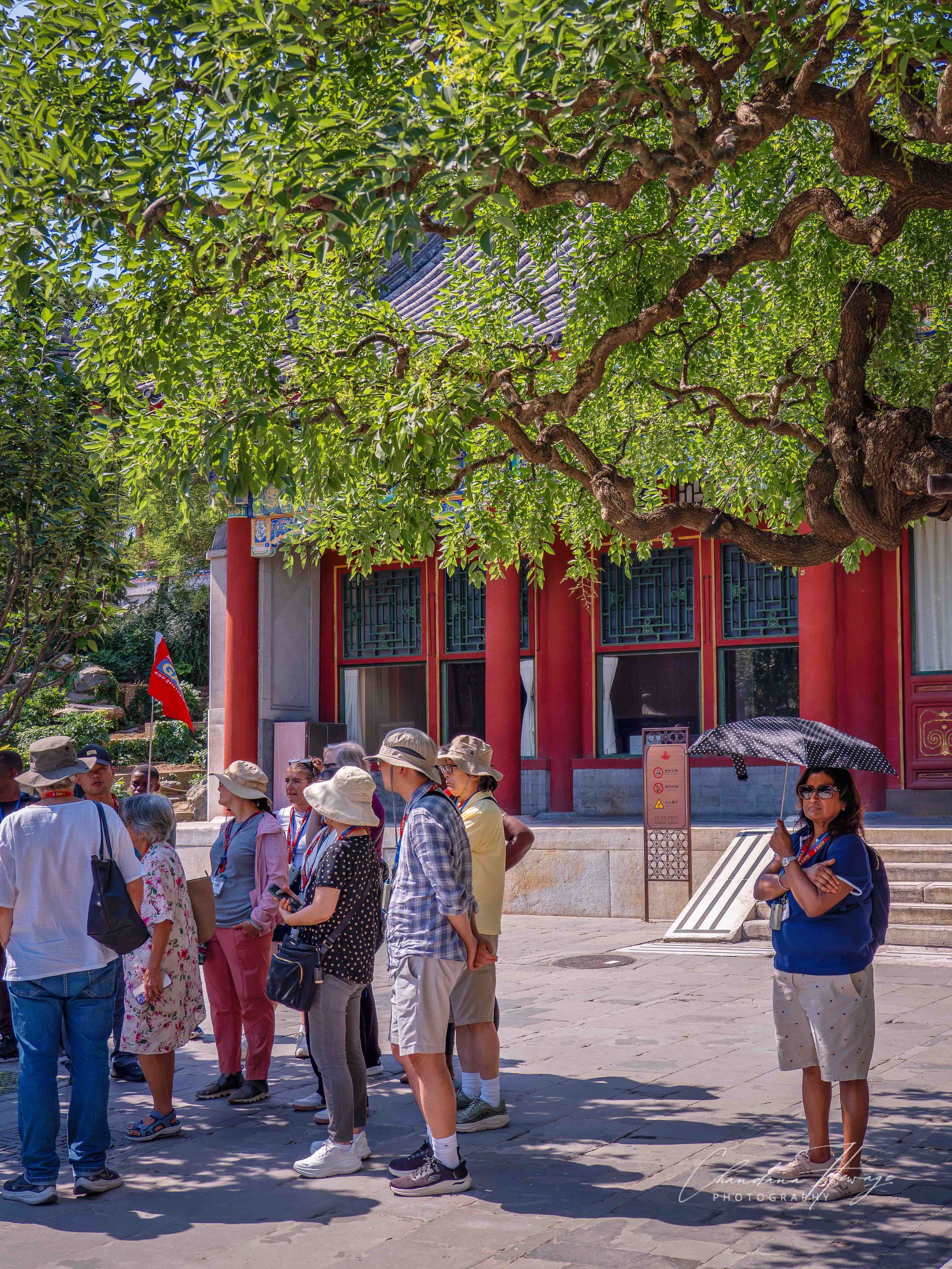
Our group.
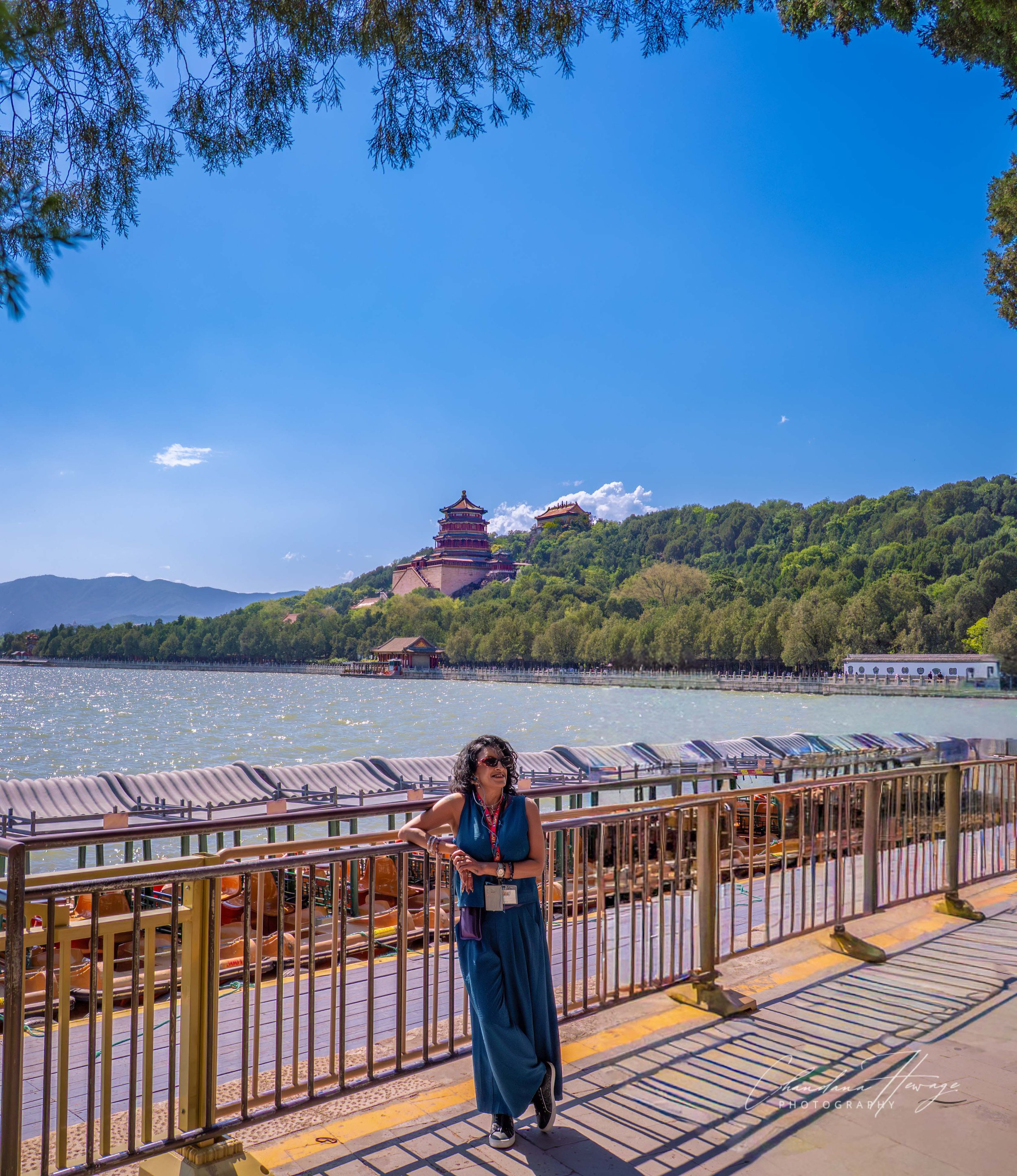
Shalini, posing at the lake.
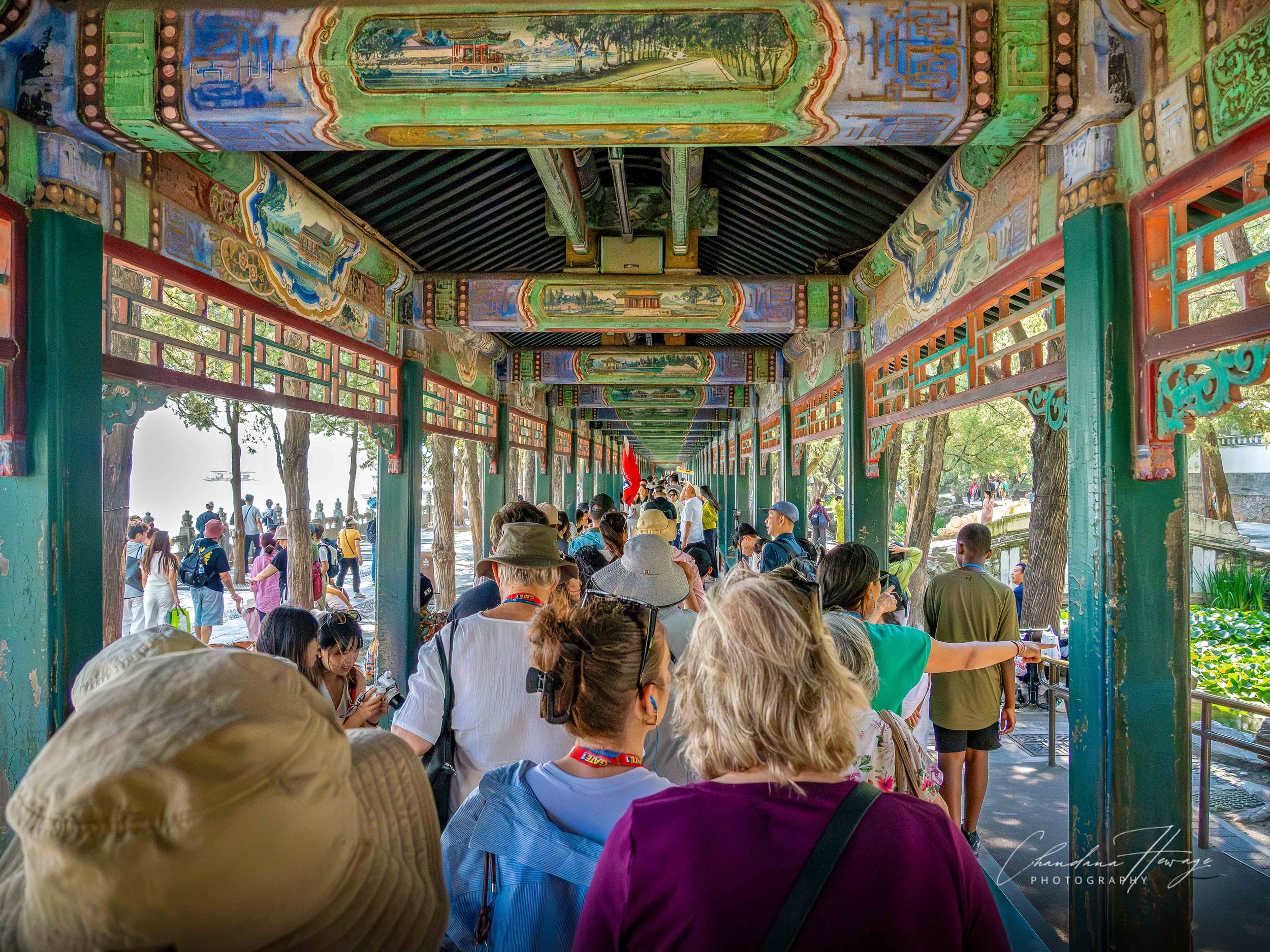
The interior of the world-famous Long Corridor (Changlang), a magnificent architectural structure along the northern shore of the Kunming Lake at the foot of the Longevity Hill. The total length is 728 meters (2,388 feet). It holds the Guinness World Record as the longest covered promenade in the world. The structure is adorned with over 14,000 individual color paintings.
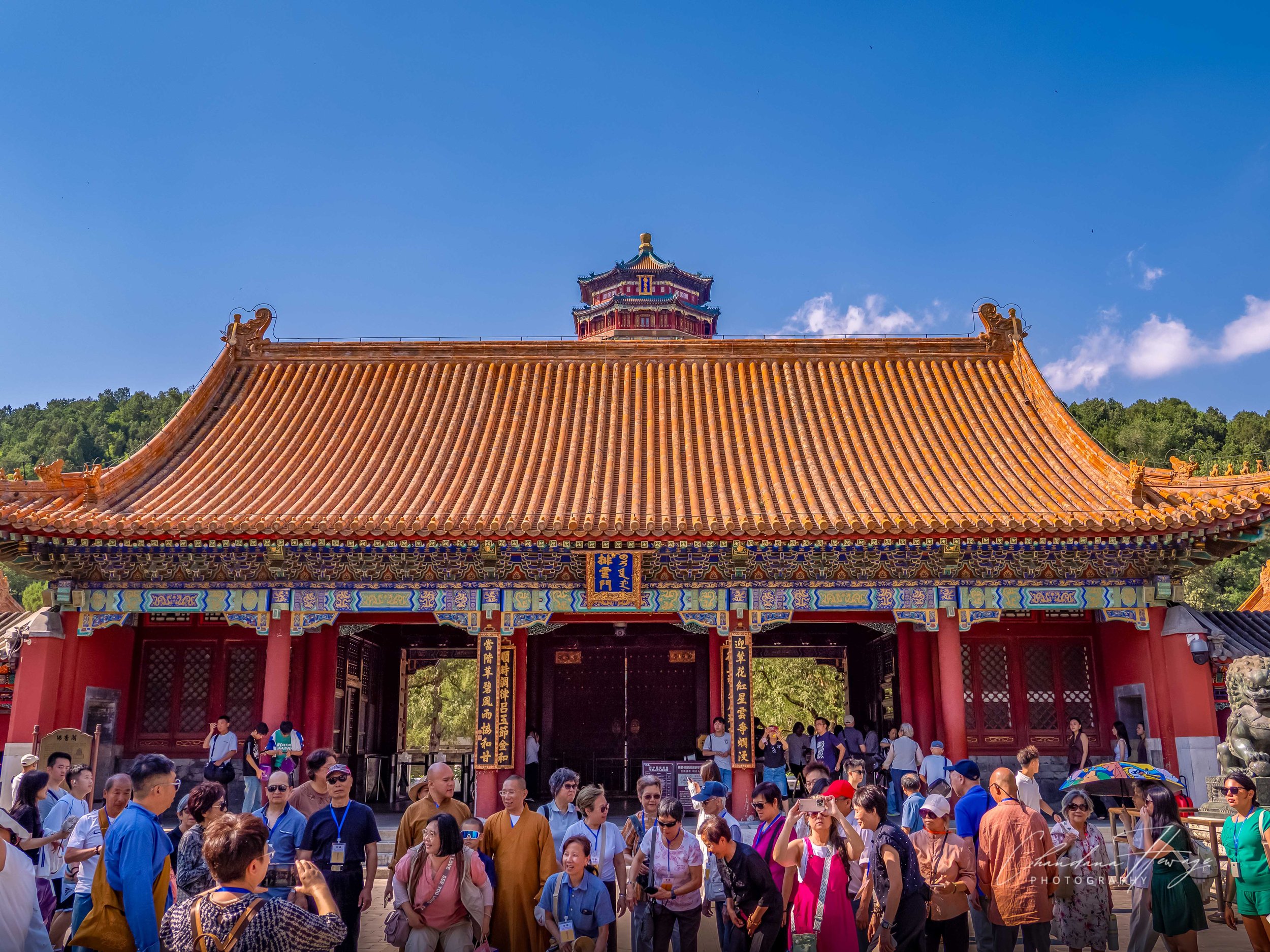
The Grand Gate of Dispelling Clouds (Paiyunmen), which serves as a monumental entrance leading to the formal, religious axis to the Longevity Hill. The courtyard of the Hall of Dispelling Clouds was used heavily by the Empress Cixi (The Dragon Lady) to receive lavish birthday greetings, celebratory tributes, and gifts from her court officials.
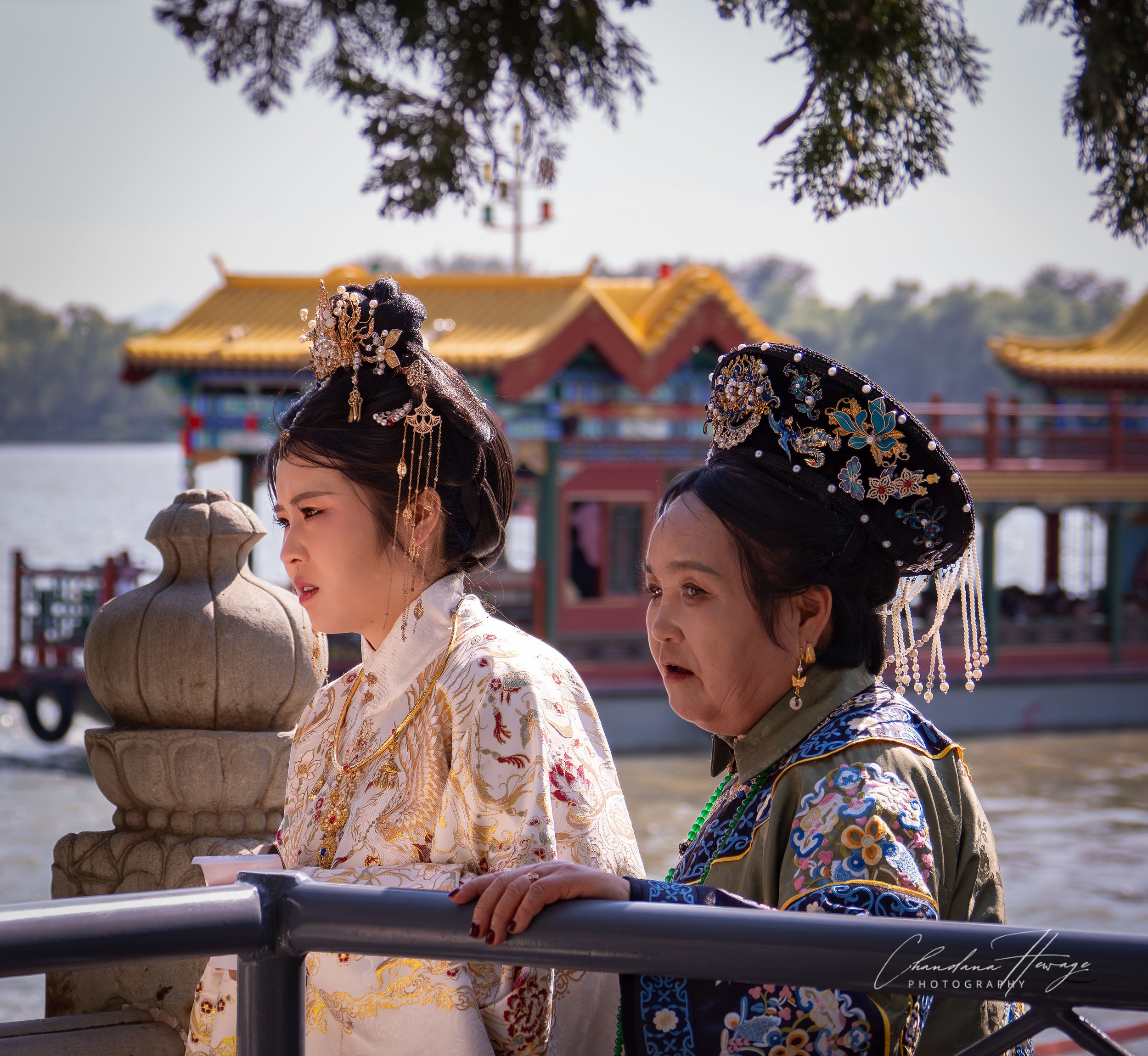
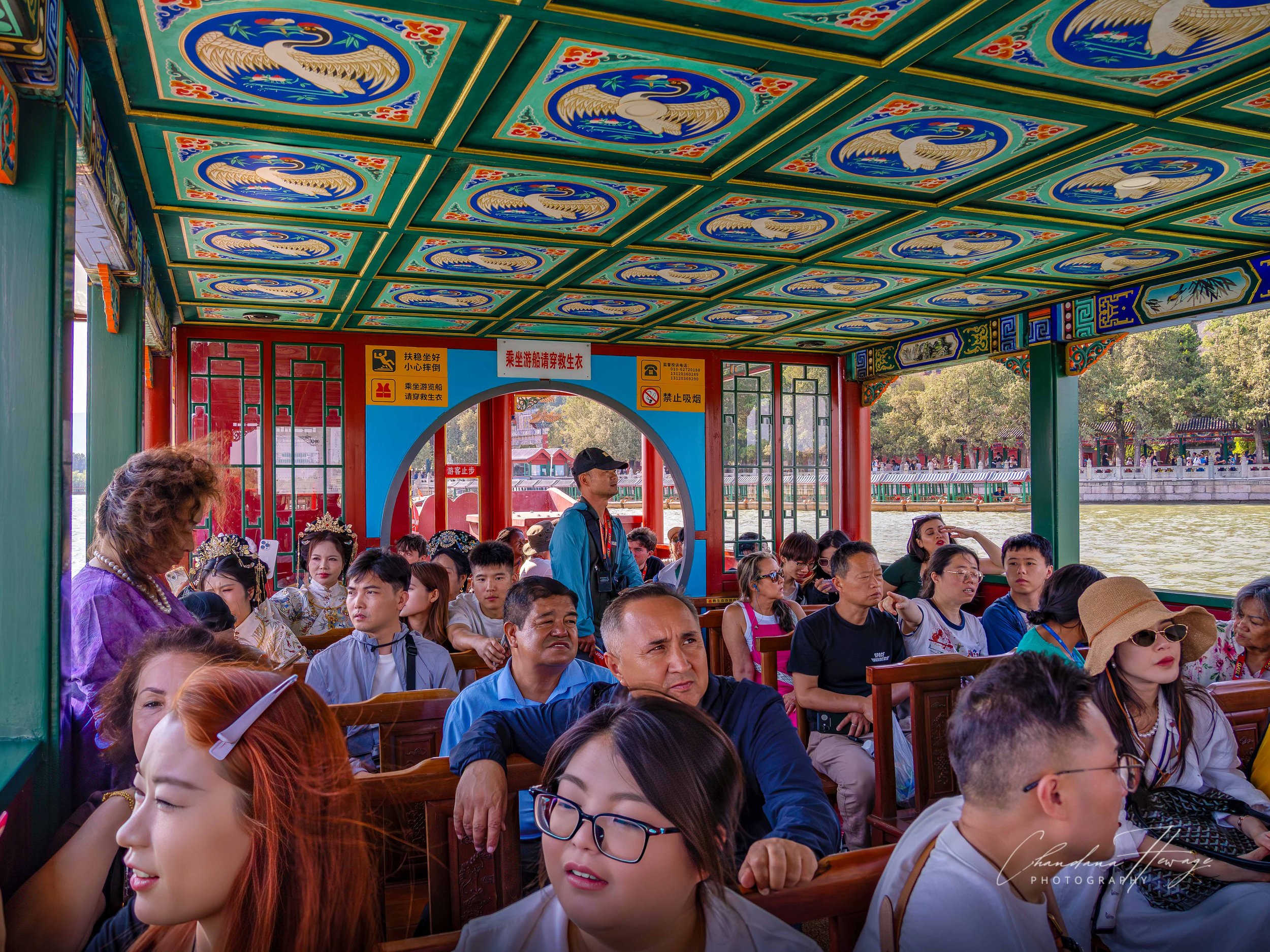
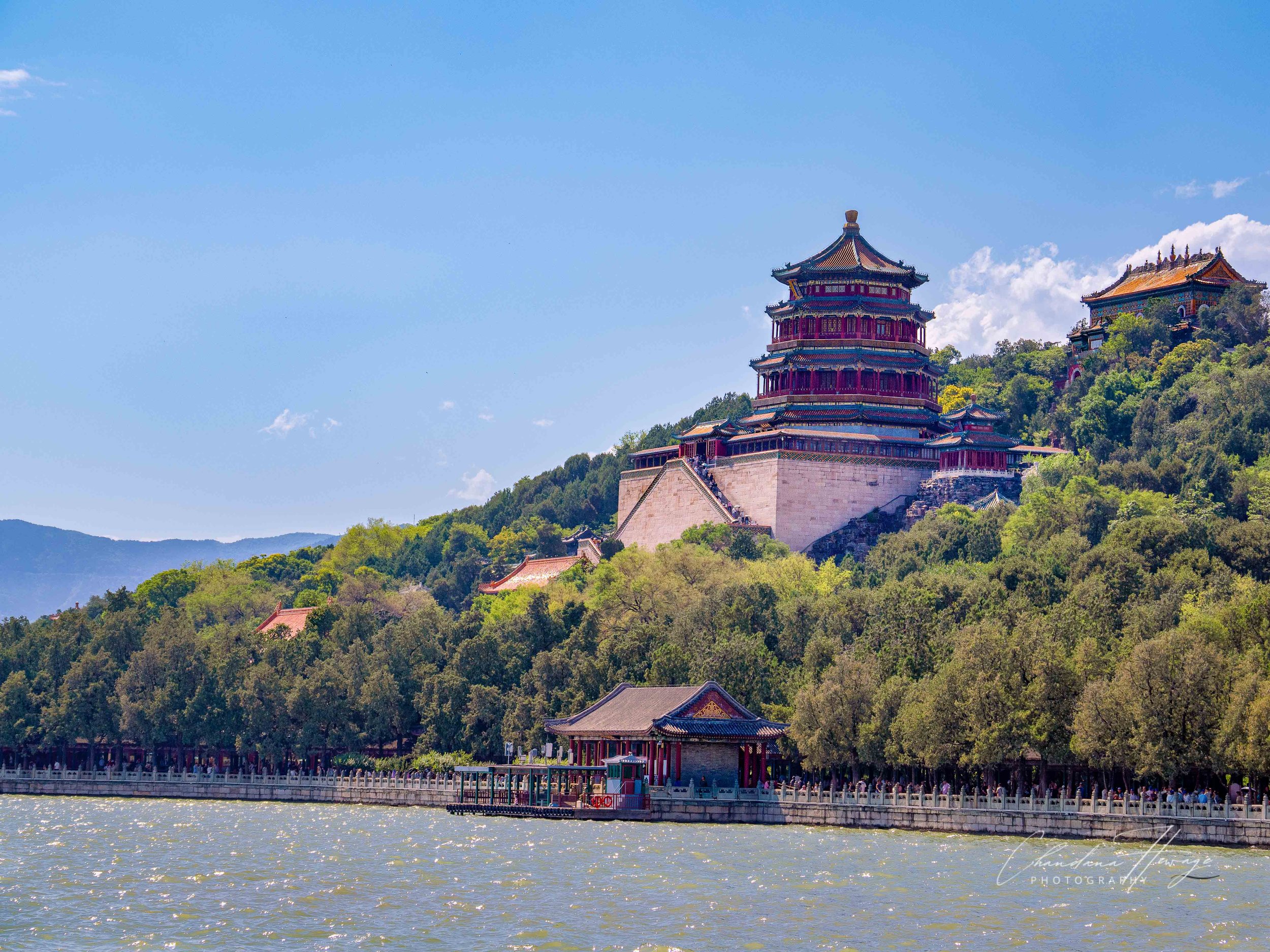
The Hall of Dispelling Clouds, which defines the high imperial Qing style.
Suzhou Market Street, also known as the Imperial Shopping Street.
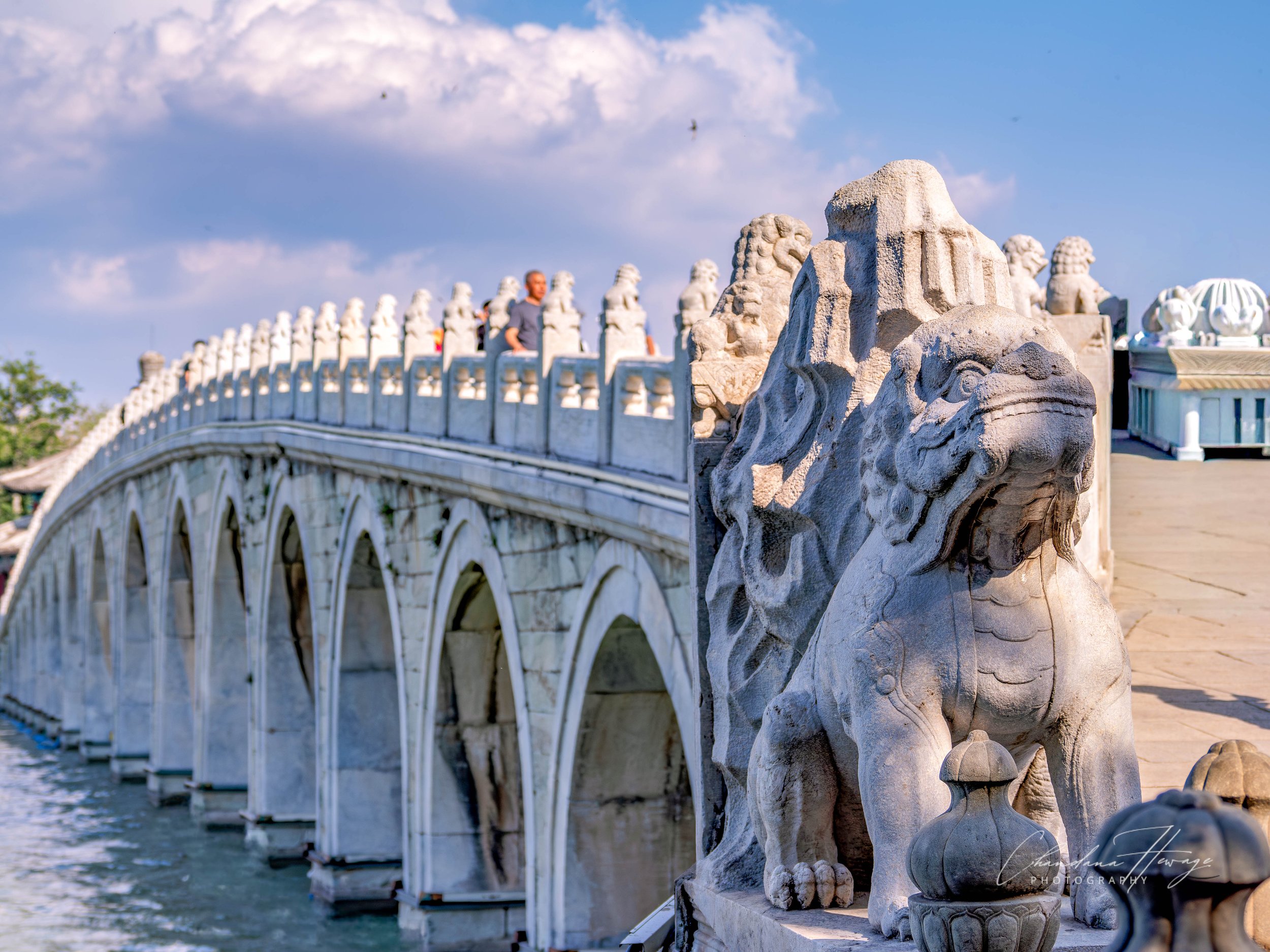
The famous Seventeen-Arch Bridge (Shiqikong Qiao), the largest and most iconic bridge within the Summer Palace. It spans Kunming Lake, connecting the eastern shore to South Lake Island (Nanhu Dao).
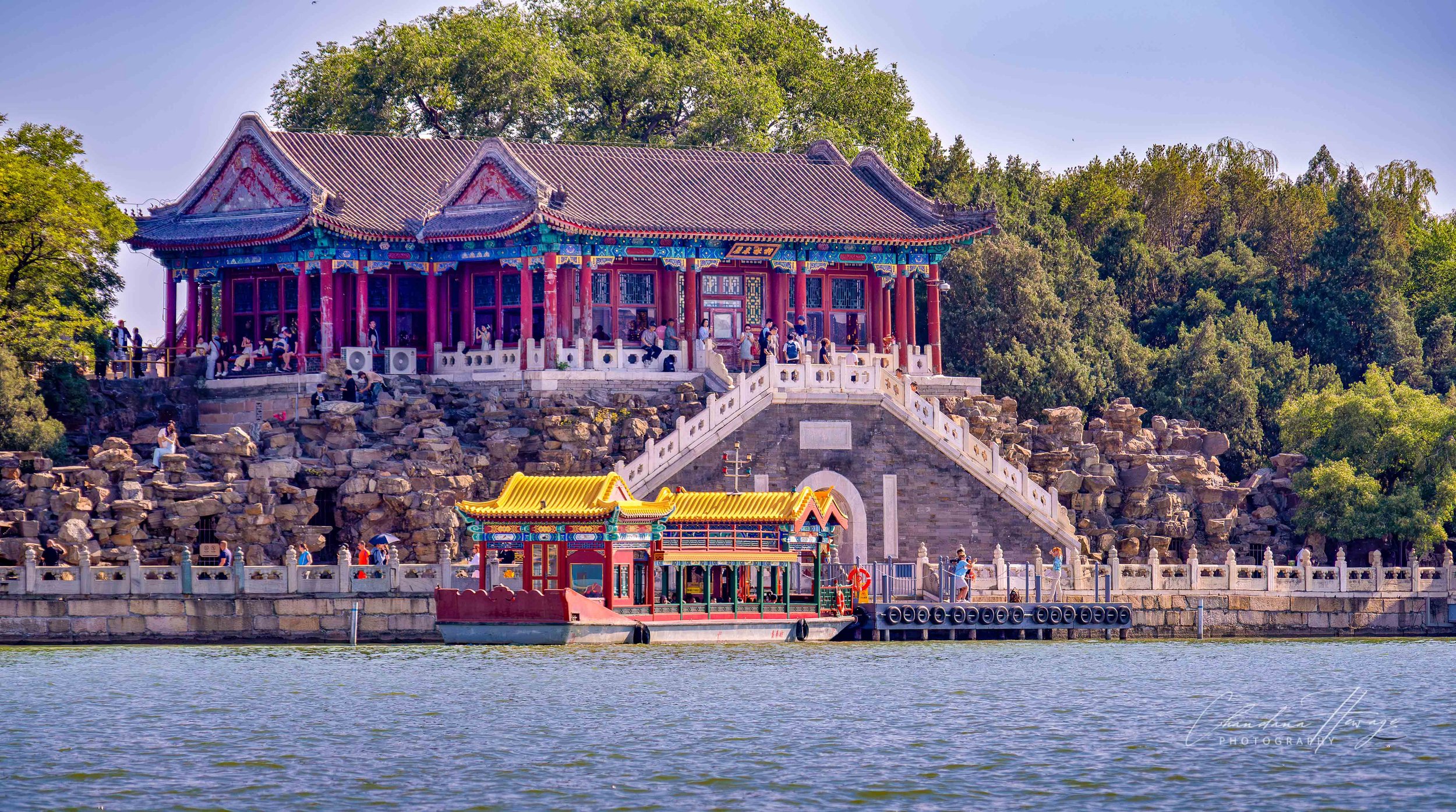
The Imperial Dock: a private embarkation point for the imperial family. Empress Cixi (The Dragon Lady) and various emperors used these exact stone piers, steps, and adjacent pavilions to board their decorated imperial pleasure boats for cruises across Kunming Lake.
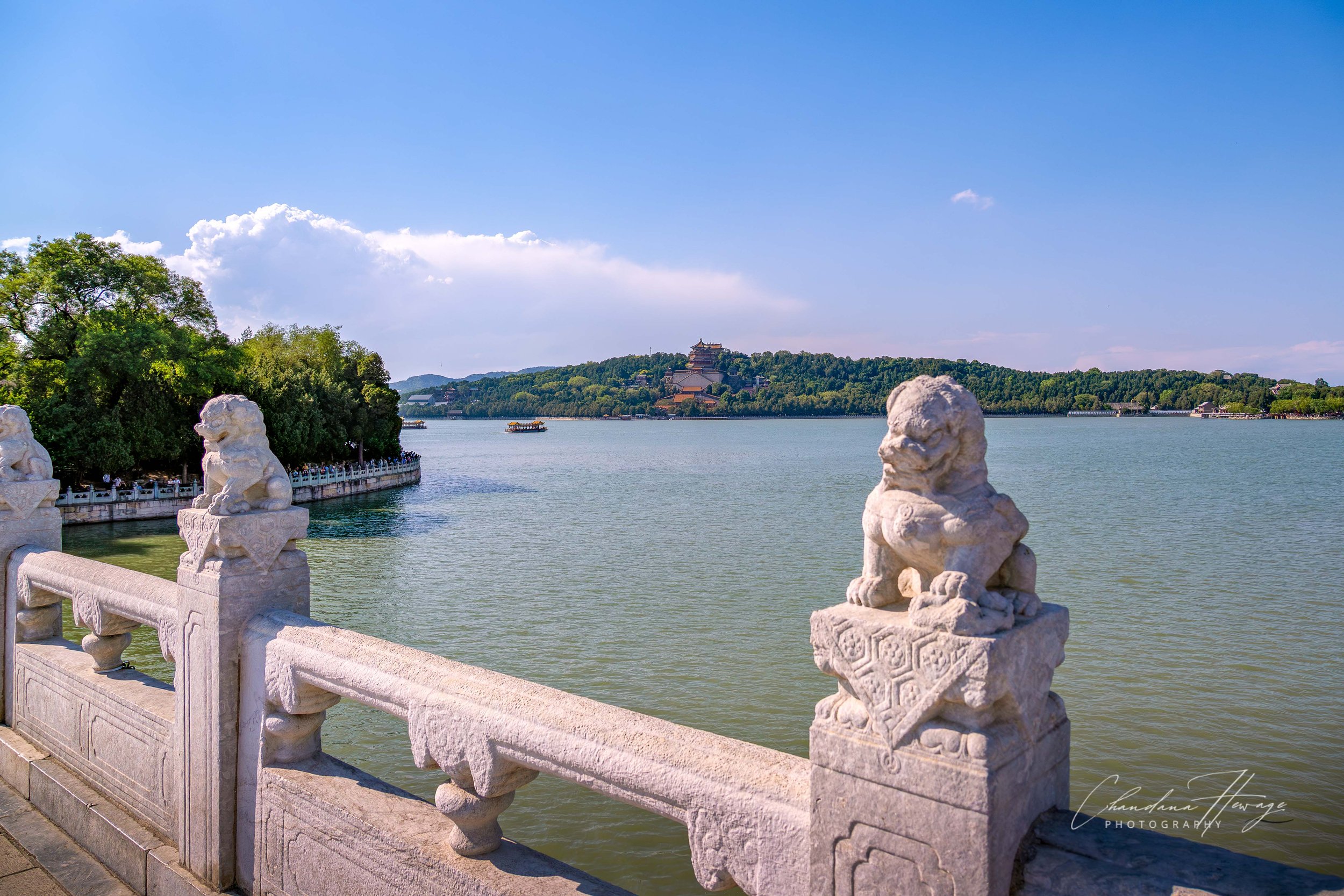
A view of Kunming Lake from the Seventeen-Arched Bridge.
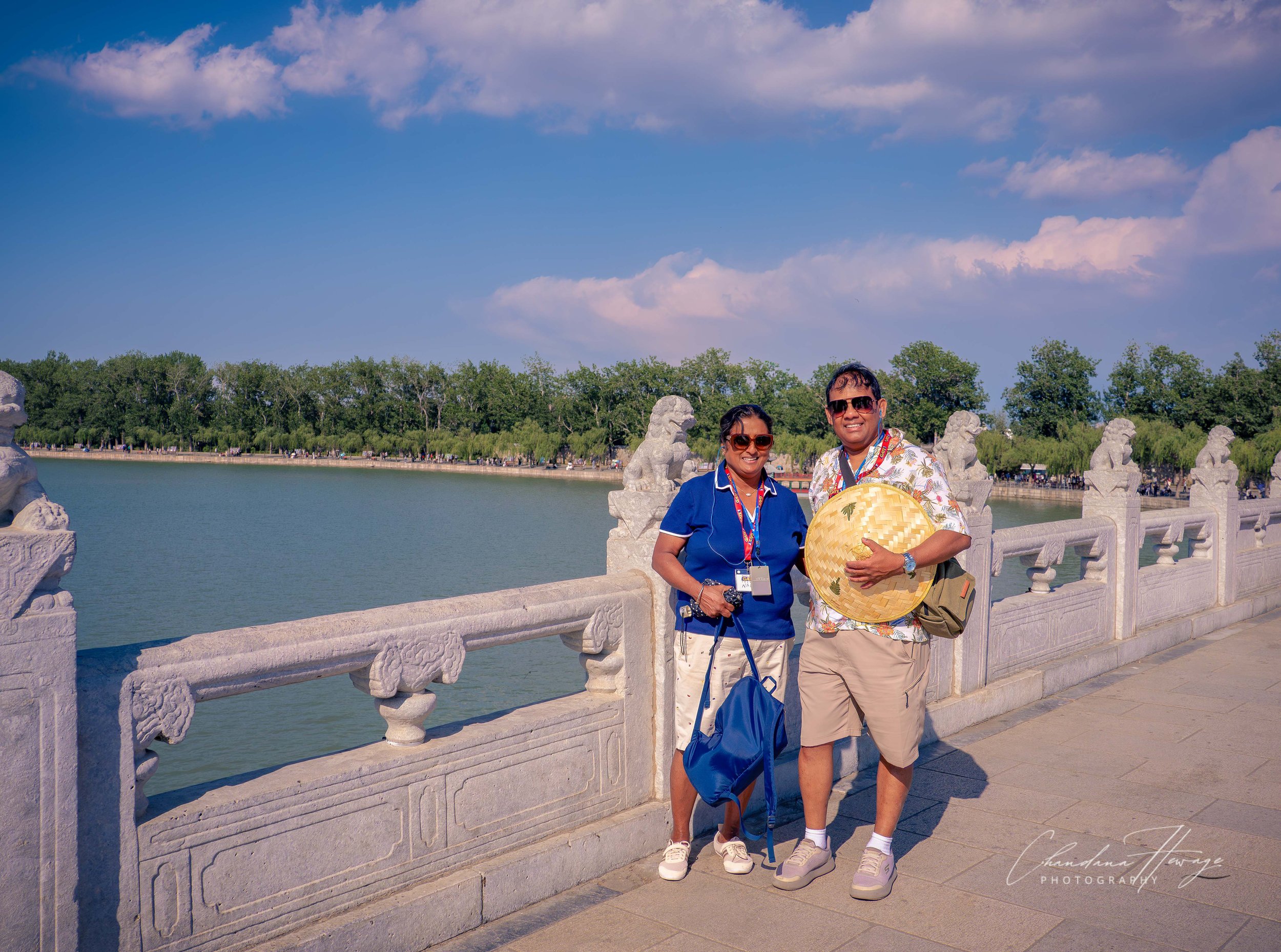
On the 17-arched Bridge. The picture was taken by Joe.
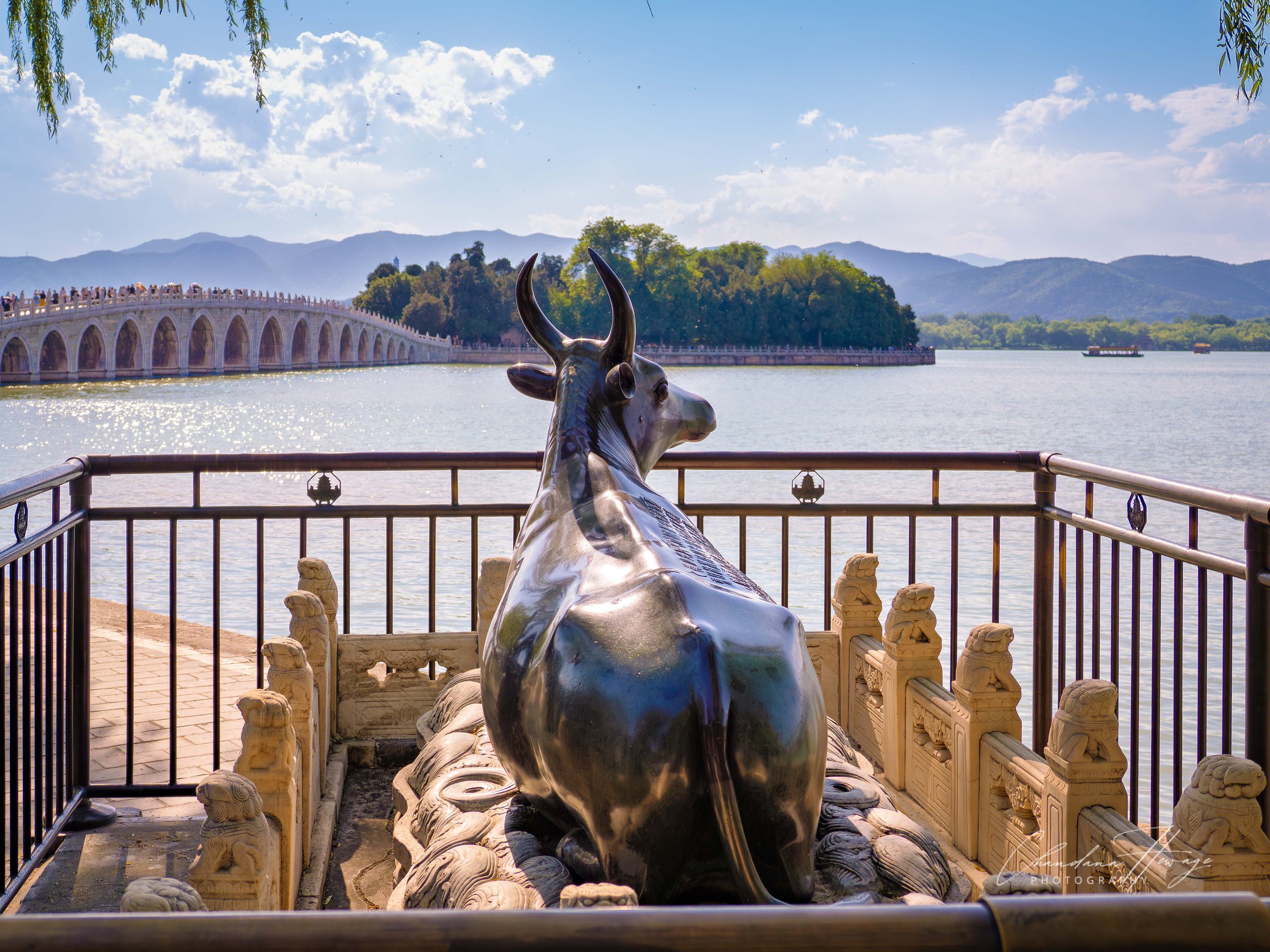
The famous Bronze Ox (also known as the Golden Ox) is resting on the eastern embankment of the Kunming Lake in the Summer Palace.
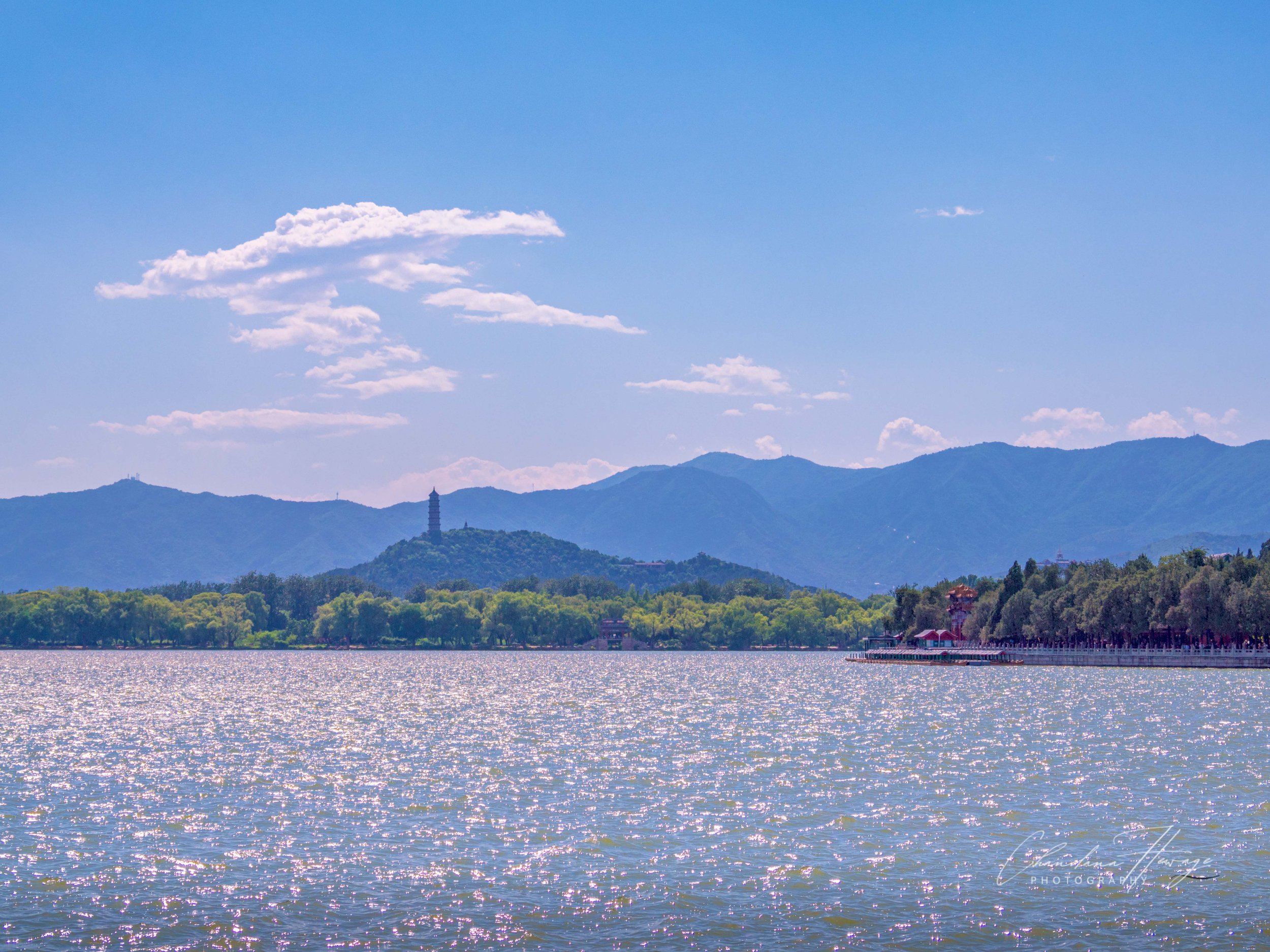
The Jade Peak Pagoda of the Summer Palace. Located to the west on Jade Spring Hill. Built in 1752 under the direction of the Qianlong Emperor.
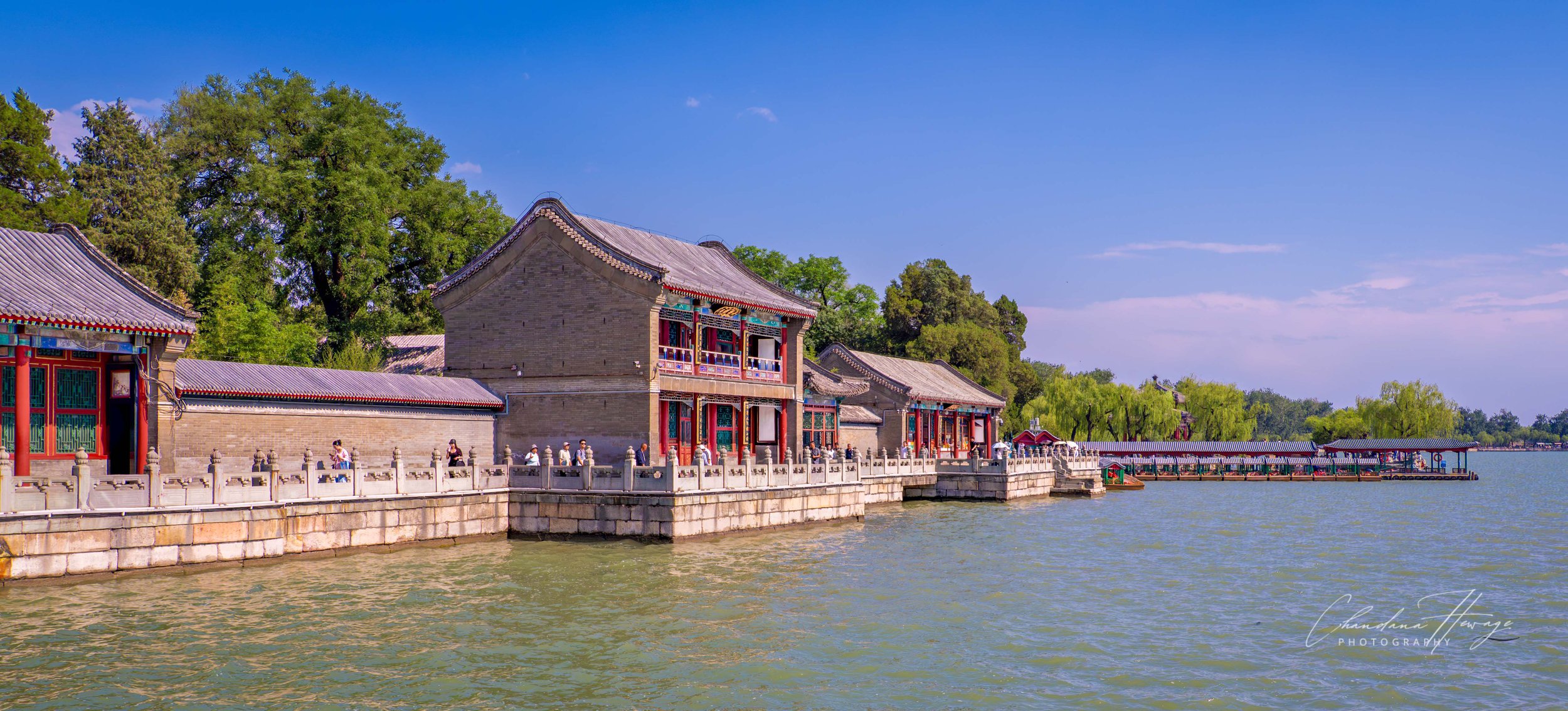
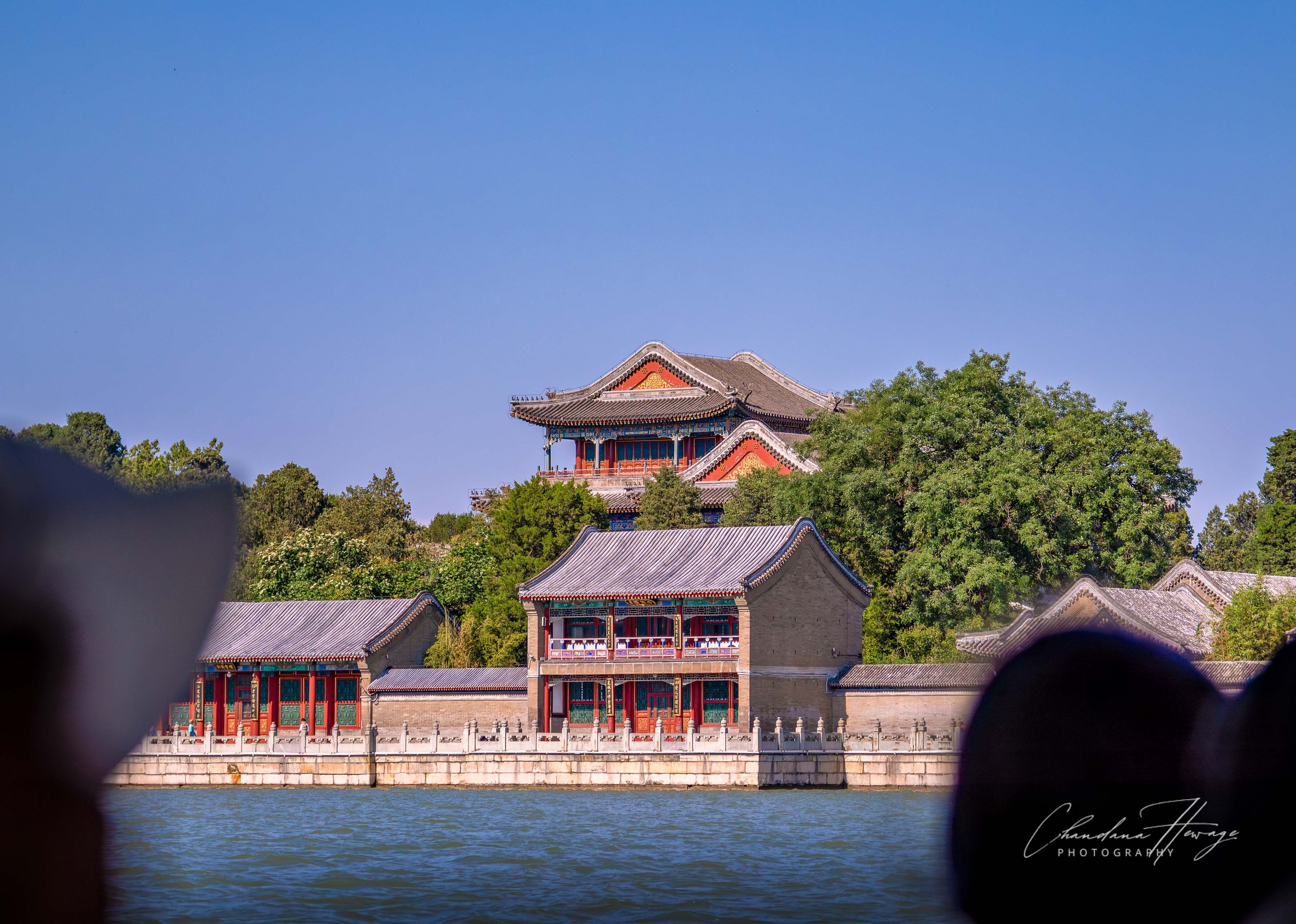
The Fish-and-Algae Pavilion, sitting right on the northern edge of the Kunming Lake within the Summer Palace.
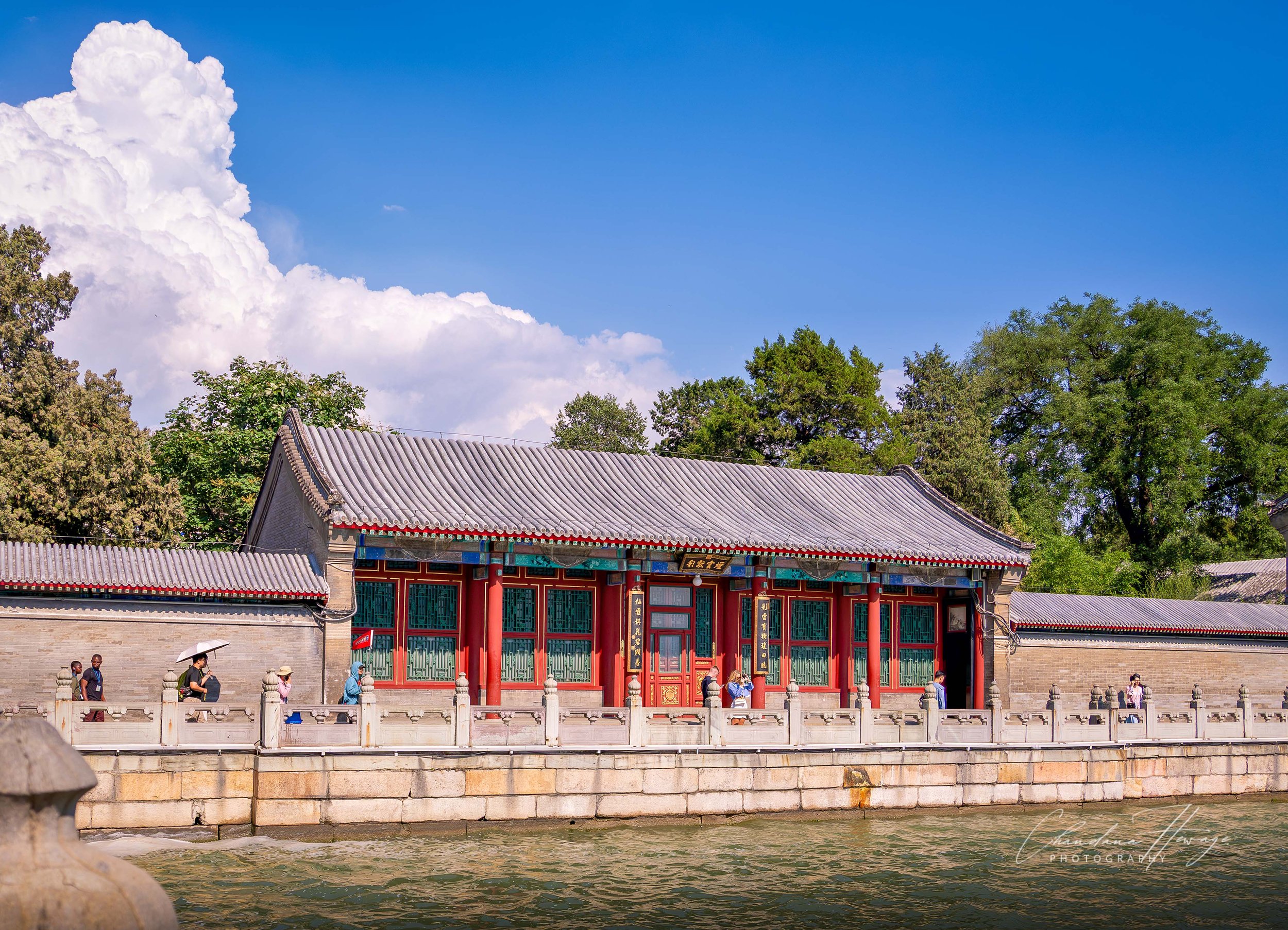
The Hall of Jade Ripples on Kunming Lake. The plaque reads: "Jade Ripples".